A typical fence means a lot of post holes, each one dug down below the frost line. That’s plenty of chances to hit something you really don’t want to hit: a gas line, a buried electric cable, a water service or a fiber line serving the whole street. Pennsylvania’s 811 system exists to prevent that. At 76 FENCE BucksMont, we submit the request for every fence we install. Here’s what’s happening behind the scenes, and what you should know as a homeowner.
What is PA One Call?
PA One Call is Pennsylvania’s one-call notification system, reached by dialing 811 or submitting a request online. Under Pennsylvania’s underground utility law, known as Act 287, anyone planning to dig must notify the system at least three business days before digging. The system then notifies the member utilities with lines in the area, and those utilities send someone to mark their lines.
That rule applies to homeowners and contractors alike. A fence post hole counts as digging.
How the process works on a fence job
- We submit the request. Once you approve your quote, we file the 811 request with your address and a description of where we’ll dig.
- The clock runs. At least three business days must pass before digging. Weekends and holidays don’t count, so a request filed late in the week takes longer.
- Utilities mark their lines. Locators come out and mark underground lines with colored paint, flags or both.
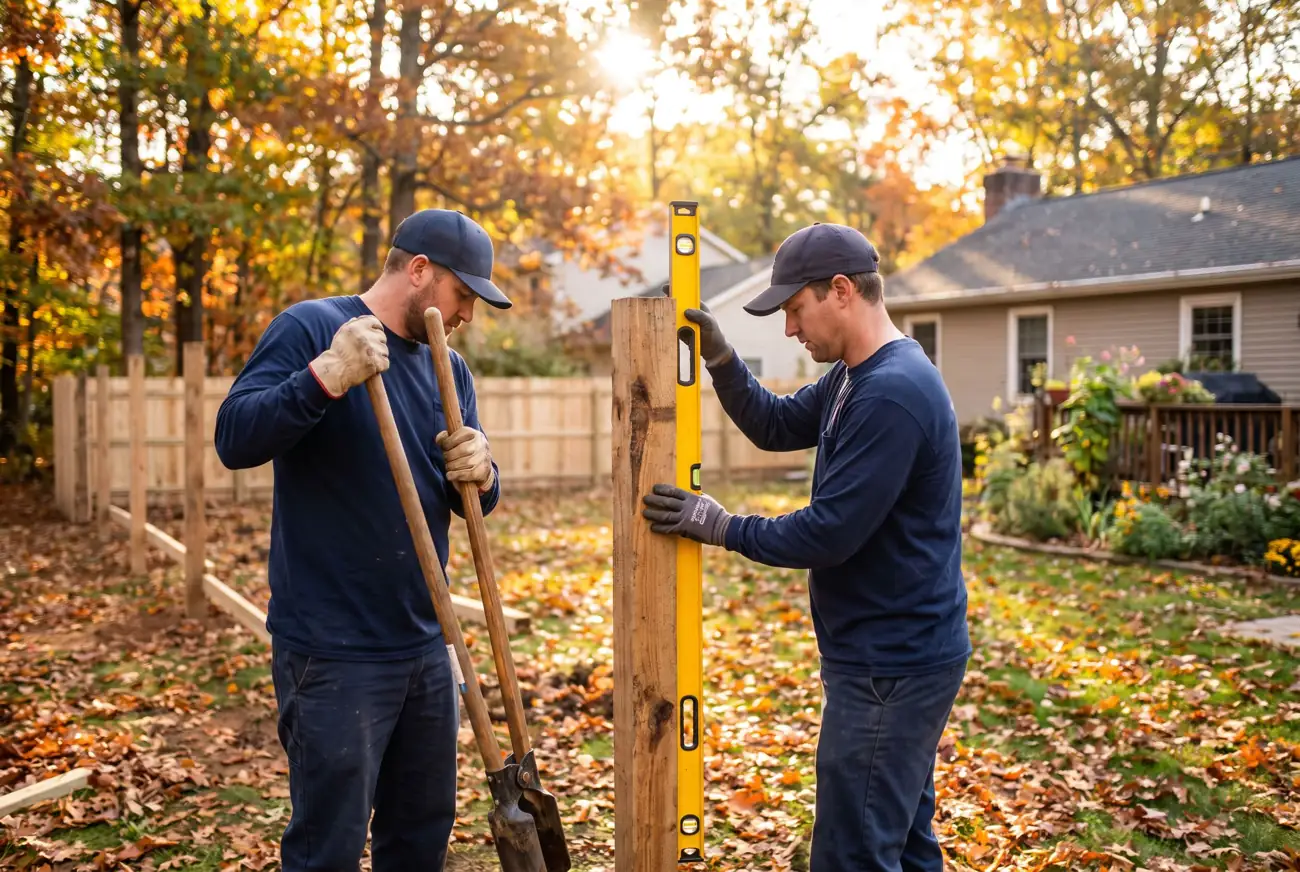
- We check the marks. On install day, our crew confirms the marks are in place and plans post locations around them.
- We dig carefully near marks. Close to a marked line, we take extra care and adjust post spacing if needed.
What the colors mean
Utility marks follow a standard color code used across the country:
- Red: electric
- Yellow: gas, oil or steam
- Orange: communications, like phone, cable and fiber
- Blue: drinking water
- Green: sewer and drain lines
- Purple: reclaimed water and irrigation
- Pink: temporary survey markings
- White: proposed digging area
What 811 doesn’t mark
This is the part that surprises people. 811 generally covers lines owned by the utility companies that belong to the system. It typically doesn’t cover lines that belong to you. Those are called private lines, and they’re common in Bucks County backyards:
Power to outbuildings
Electric lines running to a detached garage, shed, workshop, pool pump or landscape lights.
Water and irrigation
Sprinkler lines, lines to a garden spigot and, on rural lots, the line from a private well.
Septic and drains
Septic tanks, drain fields, sump discharge and downspout drain lines.
Gas to a grill or heater
A buried line to an outdoor kitchen, grill or pool heater, plus buried invisible dog fence wire.
Before your install, tell us about anything like this that you know of. A quick sketch or pointing it out during your estimate is enough. If you’re unsure, a private locating service can mark private lines for you.
The same goes for anything buried that isn’t a utility at all. Old footings from a previous fence, a buried stone wall or a tangle of big tree roots won’t show up in any marking. We find those the old-fashioned way, by digging carefully, and we adjust post spacing when we hit something. On older lots with a long history, that’s part of the job.
Why it matters so much
Hitting a gas line can be dangerous. Cutting an electric line can injure someone. Knocking out a fiber line can take down internet service for your whole neighborhood, and the repair bill can land on whoever did the digging. Skipping 811 to save a few days is never worth it. It’s the law, and it’s the reason we build three business days into every schedule.
Rocky ground and deep posts
Posts go below the frost line, commonly around 30 to 36 inches in southeast Pennsylvania, with local code governing. In central and upper Bucks County, shale and rock are common, and digging through them takes more effort and sometimes different tools. Knowing exactly where lines are lets our crew work confidently in tough ground. Our how it works page shows where 811 fits in the timeline.
You don’t have to handle any of this
We submit the 811 request, wait for the marks, check them on install day and dig with care. We also handle the permit and HOA approval. You just tell us about any private lines you know of. Learn more on our permits page or our residential installation page, then book a free estimate or call 215-602-4334.
Get a straight answer on your fence.
Free on-site estimate, zero dispatch fees. We handle the permit, the HOA paperwork and the 811 call.