
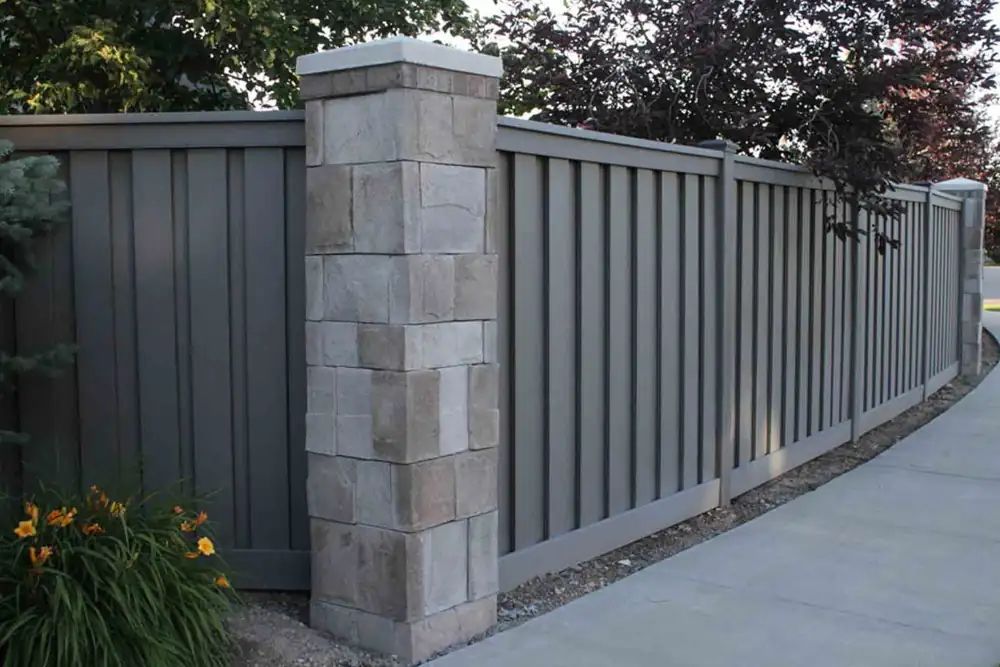
Maybe you love the look of a wood fence but you’ve owned one before, and you remember the staining. Or maybe your new patio deserves a fence that looks as good as the stonework. Composite fencing is made from a blend of materials, often wood fibers and plastics, designed to look like wood while resisting rot, splitting and insects. 76 FENCE BucksMont installs composite fences across Bucks County and eastern Montgomery County.
Why homeowners pick composite
- A wood-grain look with rich, consistent color
- No staining or sealing to keep up with
- Resists rot, splitting and insects better than natural wood
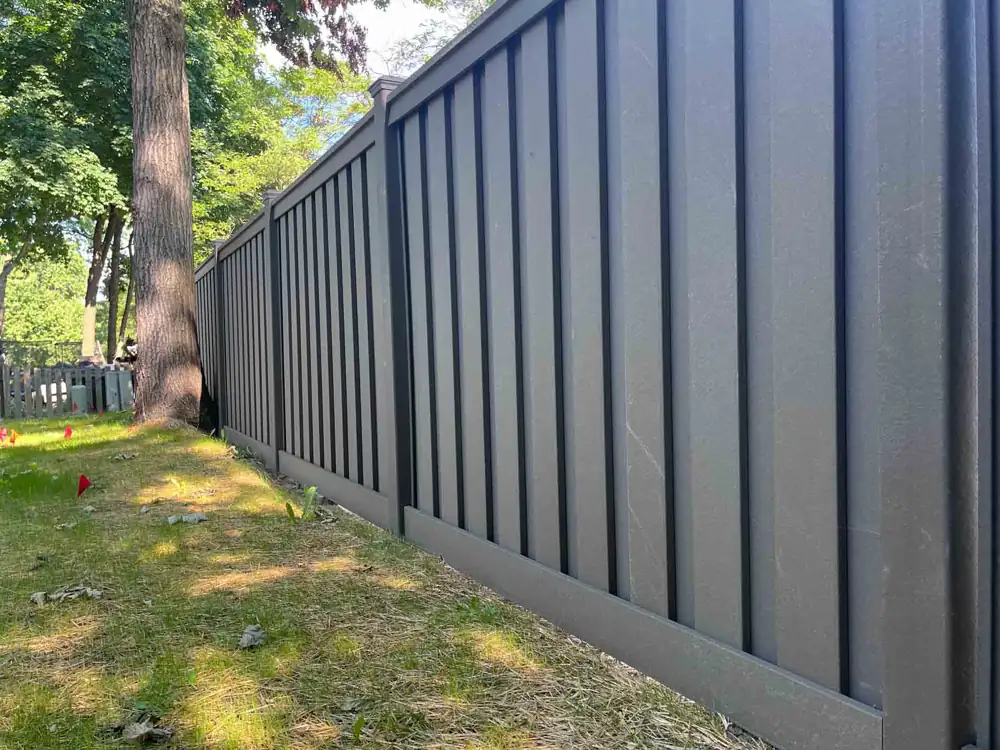
- Solid boards for strong privacy
- A modern, high-end look that pairs well with stone and pavers
Colors and styles
Composite comes in a range of tones depending on the product line: warm browns and tans, grays that go well with stone patios, and dark shades that make landscaping pop. Boards can run vertically for a traditional privacy look or horizontally for a clean, modern line. Many homeowners pair a composite fence with a matching gate and a metal or aluminum frame.
If you’re considering a horizontal design, see our horizontal fence page.
The trade-offs
Composite isn’t perfect for every situation, and here’s what to know.
Upfront cost
Composite usually costs more than wood or vinyl at the start. The payoff is less maintenance over the years. See fence cost for what drives price.
Weight
Composite boards are heavy, so posts and frames need to be solid, especially on gates.
Heat
Darker colors can get warm in direct summer sun, like most dark surfaces.
Not zero maintenance
It still needs an occasional wash to remove dirt, pollen and mildew.
Composite vs. wood vs. vinyl
If budget comes first and you don’t mind upkeep, wood is the practical choice. If you want low maintenance at a lower upfront cost, vinyl is a strong option. Composite sits in between on looks: it reads more like real wood than most vinyl does, with upkeep closer to vinyl. For a side-by-side look, visit our fence materials overview.
Real-world examples
If you just finished a paver patio with a fire pit, a gray or dark composite fence can frame the space and hide the neighbor’s garage. If you live on a busy street and want a solid barrier that looks finished from both sides, composite boards can deliver that. If your backyard is shaded by mature trees and a wood fence there would stay damp, composite resists rot better, though it will still need an occasional wash.
How composite is installed
Most composite fence systems use posts with boards that slide into or fasten onto a frame, and many pair composite boards with aluminum or steel posts and rails for extra stiffness. That framing keeps long runs straight and helps gates stay square under the weight. The exact method depends on the product you choose, and we follow the manufacturer’s installation requirements so your warranty coverage stays intact.
Gates deserve special mention. A wide composite gate is heavy, so it needs a strong frame, solid hinge posts and good hardware. If you plan to drive a mower through, ask about a double gate so each leaf stays lighter.
Built for Bucks County ground
Because composite is heavy and a solid privacy fence catches wind, post setting matters. Our crew sets posts with local frost depth in mind, commonly around 30 to 36 inches in southeast PA, and local code governs. Rocky ground in central and upper Bucks County and wet clay near creeks both need planning. As always, we handle the permit and submit the PA One Call (811) request before digging.
Get a composite fence estimate
Estimates are free, with no dispatch fee. Financing is available through Wisetack, where you can check your options online in minutes, and we offer and honor manufacturer warranty coverage on every fence we install. Call 215-602-4334 for central and upper Bucks County, or 610-477-7080 for lower Bucks and eastern Montgomery County.
Get a straight answer on your fence.
Free on-site estimate, zero dispatch fees. We handle the permit, the HOA paperwork and the 811 call.