Plenty of yards in Bucks County and eastern Montgomery County aren’t flat. Maybe your backyard drops toward a creek, rises up a rocky knoll or rolls down to a tree line. When you start pricing a fence, the slope raises real questions: Will there be gaps at the bottom? Will it look crooked? Can the dog squeeze under? 76 FENCE BucksMont fences sloped yards all the time. Here’s how it works.
Two ways to handle a slope
There are two basic approaches, and most sloped fences use one or a mix of both.
Racked (contoured)
The fence follows the ground. Rails angle with the slope, and pickets or panels stay plumb. The bottom tracks the grade closely, so there are no big triangular gaps. It looks smooth and natural on a gentle, steady slope.
Stepped
Each panel stays level, and the fence drops down the hill in steps, like a staircase. The top line looks tidy and square, but each step leaves a triangular gap at the bottom on the downhill side.
Which one is right depends on how steep the slope is, how even it is and what material you choose.
Which materials handle slopes well
- Chain link follows the ground easily. The fabric flexes to match the grade, which is one reason it’s so common on rolling back lines. See chain link fences.
- Aluminum and ornamental steel often come in rackable panels that can angle to follow a slope within limits. On steeper ground, they’re stepped.
- Wood is very adaptable. Boards can be cut to follow the grade on site, so wood privacy and picket fences can be racked, stepped or a mix.
- Vinyl panels are usually stepped, because the rigid panels don’t rack much. Some styles have more flexibility than others.
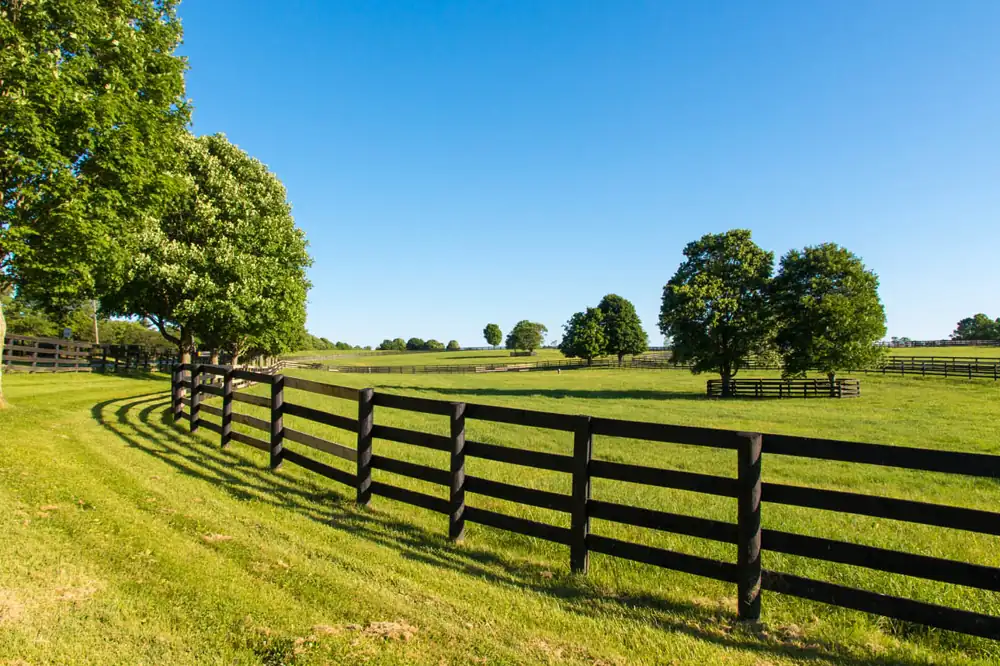
- Split rail and board fences naturally follow rolling ground, which is part of why they look so at home on larger properties. See split rail fences.
Dealing with the gaps
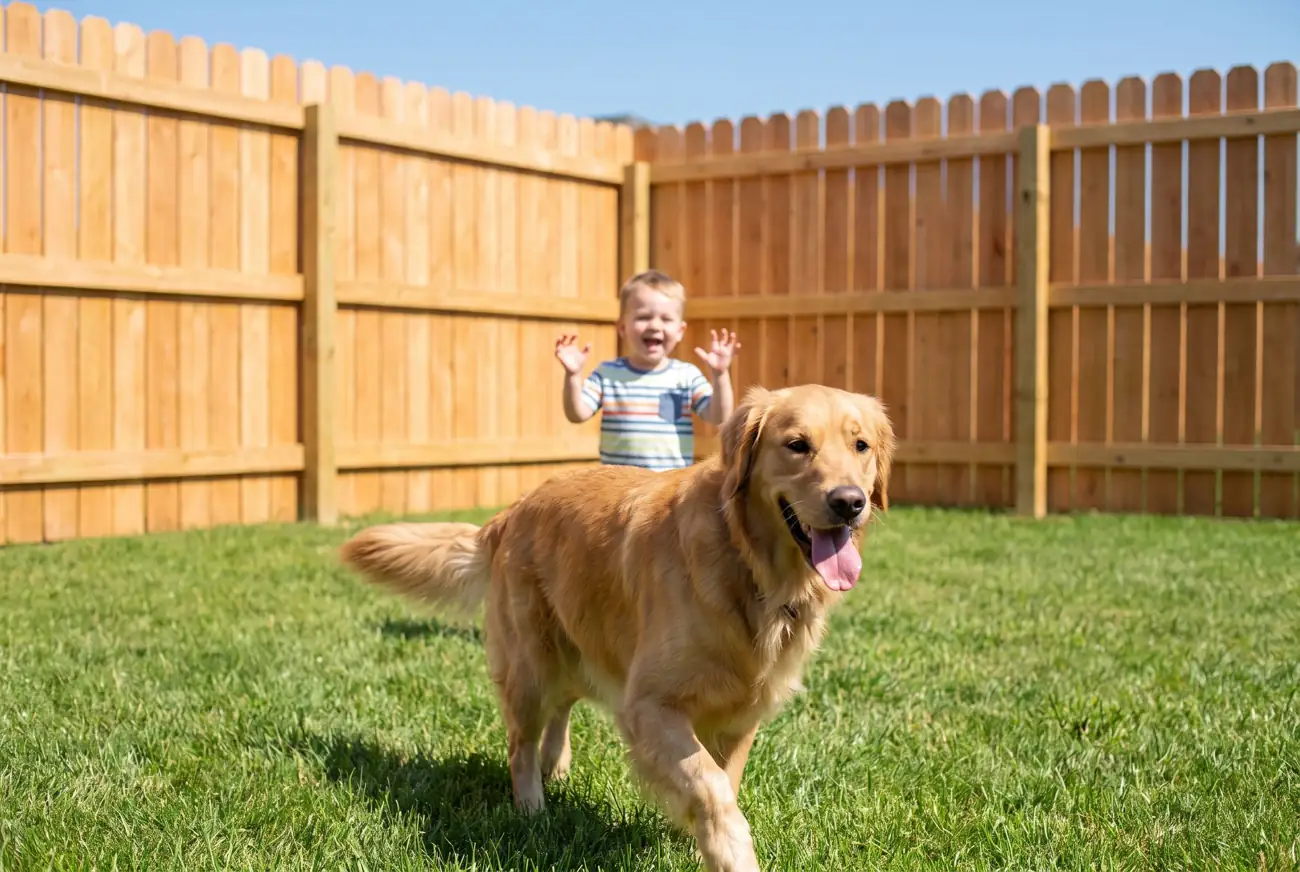
If you have a dog or you’re fencing a pool, gaps under a stepped fence matter. A few ways to close them:
Rack instead of step where the material allows it.
Use shorter panel sections so each step is smaller.
Add a trimmed bottom board or gravel board on a wood fence to fill the triangle.
Adjust the grade slightly along the fence line where that’s practical.
For dogs that dig or squeeze, our dog fence page has more ideas. For pools, remember that Pennsylvania’s Uniform Construction Code sets requirements for barriers, including a minimum 48-inch height and self-closing, self-latching gates that open away from the pool, and the inspector has the final say on gaps and clearances.
Gates on a slope
Gates are the trickiest part of a sloped fence. A gate that swings downhill can drag on the ground before it opens fully. Usually the fix is placing the gate on the flattest stretch you have, choosing the swing direction carefully or setting the gate a little higher with a trimmed bottom. Wider gates on a slope may work better as a double gate. We’ll plan gate locations at your estimate. More on gates on our gates page.
Water, soil and rock
A slope means water is moving somewhere, and your fence shouldn’t fight it. Solid privacy fences built straight across a drainage path can act like a dam, trapping water and debris on the uphill side. Sometimes it helps to leave a gap at the bottom in those spots or to choose a more open style there.
Ground conditions matter too. If your yard slopes down toward a creek, the lower end may have clay soil and a high water table, which affects how posts are set. On upper Bucks hillsides, shale and rock are common, and digging post holes can take real effort. Either way, posts need to go below the frost line, commonly around 30 to 36 inches in southeast Pennsylvania, with local code governing. On a slope, that depth is measured from the ground at each post.
Does a slope cost more?
Usually a bit, because racking or stepping takes more labor and careful layout, and gates may need extra adjustment. Rock makes it more. Our fence cost page explains the factors. The good news: a free estimate lets us see your slope and price it accurately, rather than guessing.
The short version
- Gentle, even slope: racking often looks best.
- Steep or uneven slope: stepping or a mix is usually more practical.
- Pets or pool: plan for gaps from day one.
- Drainage path: don’t build a dam.
Want someone to look at your hill with you? Book a free estimate or call 215-602-4334 for central and upper Bucks, or 610-477-7080 for lower Bucks and eastern Montgomery County.
Get a straight answer on your fence.
Free on-site estimate, zero dispatch fees. We handle the permit, the HOA paperwork and the 811 call.