
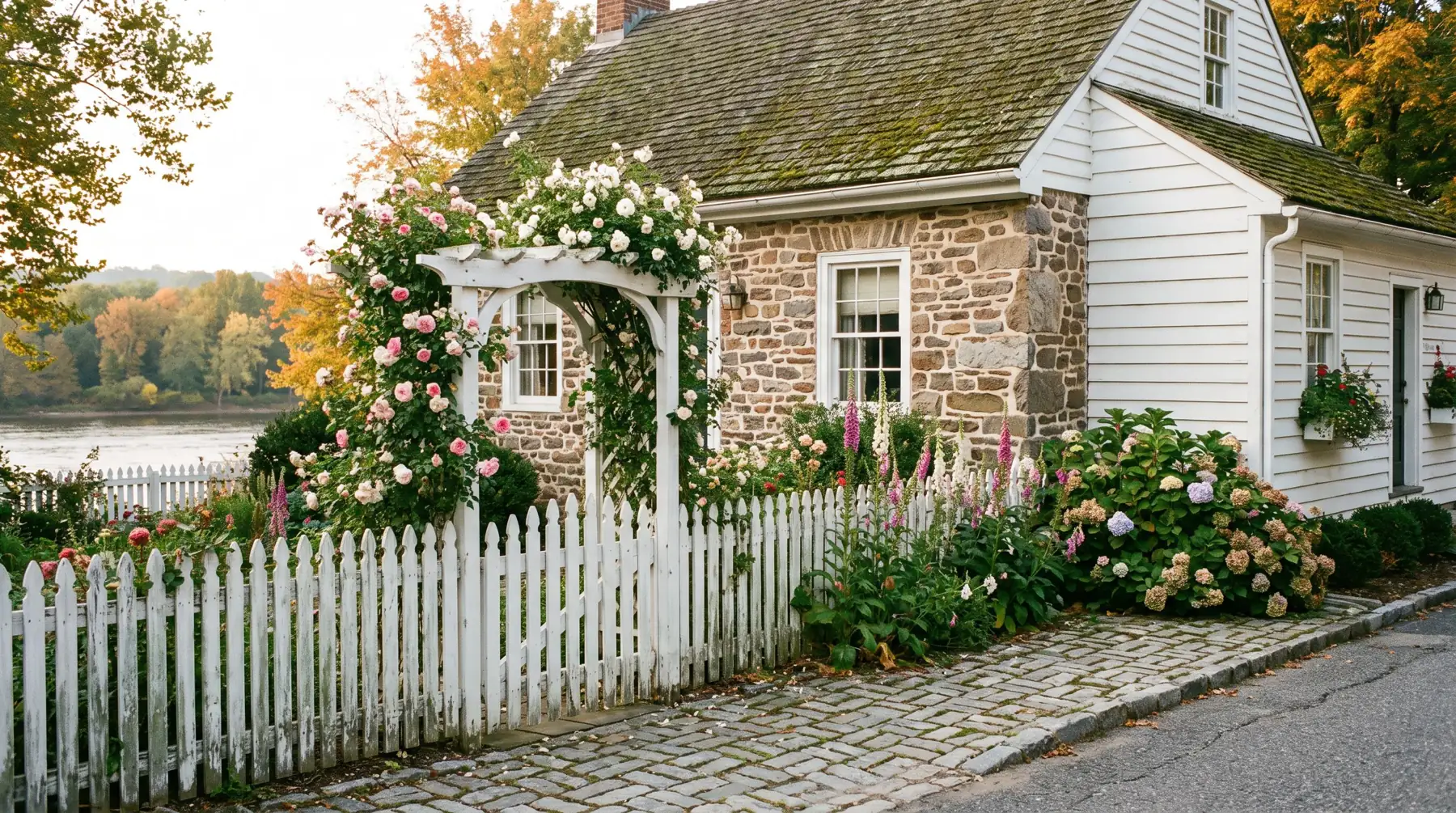
A picket fence isn’t about hiding anything. It’s about framing the house, marking where your yard ends and the sidewalk begins, and giving kids and dogs a boundary they can see. Around here it fits right in, whether that’s a stone colonial on a Doylestown street, a cottage in a river town or a farmhouse out past Buckingham. 76 FENCE BucksMont installs picket fences in wood, vinyl and aluminum across Bucks County and eastern Montgomery County.
What a picket fence is good at
Curb appeal
It finishes the front of the house the way trim finishes a window. On an older home, it can look like it’s been there for a century.
Light containment
It gives small children and many dogs a clear edge. It won’t stop a determined jumper, but it works for a lot of households.
Garden borders
A picket fence around a kitchen garden or flower bed keeps foot traffic out and adds structure to the planting.
Picking a material
Wood is the traditional choice and the one most people picture. Cedar and pressure-treated pine both paint well. You can choose pointed, dog-ear or rounded tops and adjust the spacing. Expect to repaint every so often; that’s part of owning a wood picket fence. See wood fences.
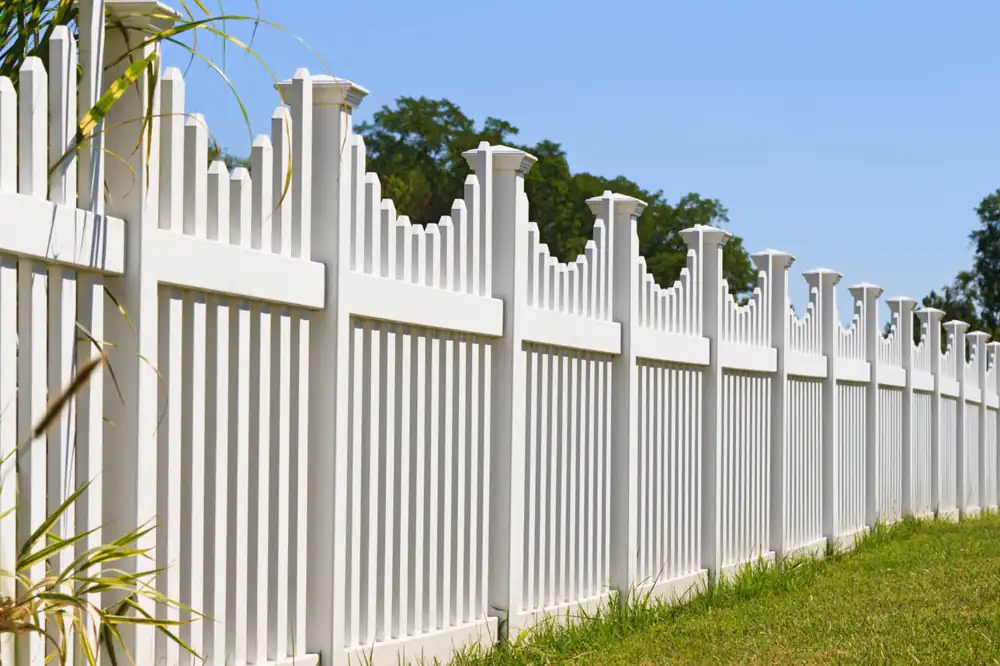
Vinyl gives you the crisp white look without the paint. Scalloped and straight-top styles are both common. See vinyl fences.
Aluminum picket styles read as a black iron-look fence. They don’t rust, and they suit formal fronts and historic streetscapes well. See aluminum fences.
If you live in a historic borough
This part matters. Boroughs with historic districts, including Doylestown, New Hope and Newtown, may require architectural review for fences visible from the street. A front-yard picket fence almost always is. That can mean the board or commission weighs in on the material, style or color before your permit is issued.
Don’t let that scare you off. It mostly means planning a little further ahead. We’ve put together a guide to historic district fences, and our permit service handles the applications and the back-and-forth for you.
Details that separate a good picket fence from a so-so one
- Straight top line. On flat ground, pickets should run level. On a slope, we decide with you whether to step the sections or follow the grade.
- Even spacing. Consistent gaps are what make it look right from the sidewalk.
- A gate that lines up with the walk. Put the gate where people actually come and go, and make sure it swings clear of steps.
- Solid posts. Short fences still need posts set deep enough for freeze-thaw winters. Frost depth here is commonly around 30 to 36 inches, and local code governs.
- Room for roots. Mature trees along older streets mean we sometimes adjust post spacing to avoid big roots.
Picket fences for pets
If the fence has to hold a dog, tell us the breed and habits. A picket fence can work for many dogs, but jumpers and diggers need more height or a different design. Our dog fence page covers what to look for.
Keeping it looking sharp
A picket fence sits right out front where everyone sees it, so a little care goes a long way. On wood, keep an eye on the tops of the pickets and the bottom rail, since that’s where water sits longest. Touch up paint when you see it peel instead of waiting for a full repaint. Keep mulch and soil pulled back from the boards so they can dry out after rain. Vinyl mostly needs a wash with a hose and a soft brush once or twice a year. Aluminum needs even less. And if a storm, a snowplow or a stray car takes out a section, our fence repair crew can usually match it and get it back in line.
Getting started
The estimate is free, with no dispatch fee. We’ll look at your frontage, talk through style and material, and let you know about any review or permit steps before anything goes in the ground. Most residential installs take about a day or two on site once materials arrive. Call 215-602-4334 to set up a visit.
Get a straight answer on your fence.
Free on-site estimate, zero dispatch fees. We handle the permit, the HOA paperwork and the 811 call.