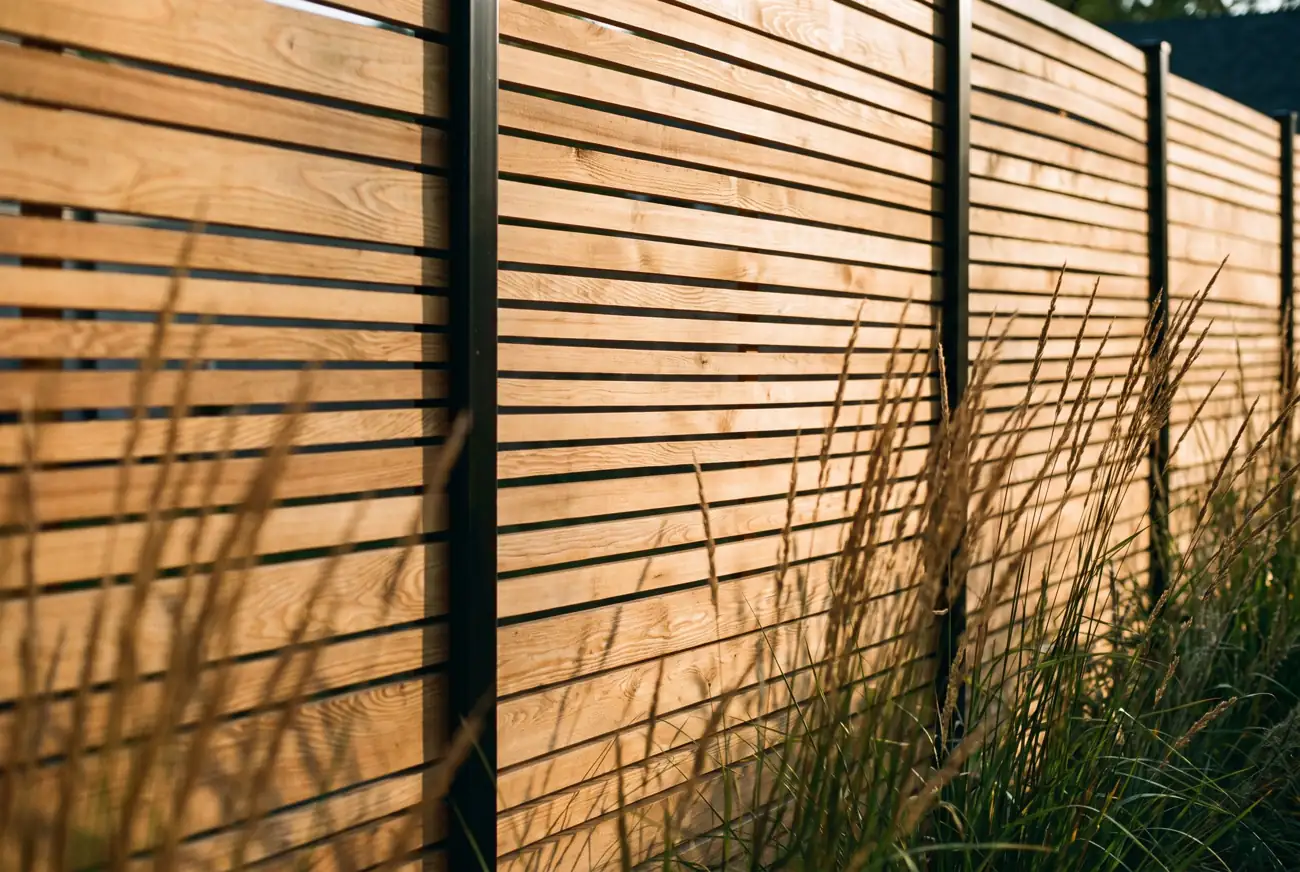
A horizontal fence turns the usual fence on its side. Instead of vertical boards, long boards run parallel to the ground, which gives the yard a calmer, more modern look. It works on new construction, on a renovated ranch, and more often than you’d think on older homes where the owners want the backyard to feel like its own space. 76 FENCE BucksMont builds horizontal fences across Bucks County and eastern Montgomery County, and we’ll be straight with you: they look simple, but they take more care to build right than a standard fence.
Why people pick horizontal
It looks intentional
The long lines make a yard feel wider and pair well with patios, pavers, fire pits and outdoor kitchens.
You control the gaps
Butt the boards tight for full privacy, or space them out for a semi-private screen. Same style, different feel.
It mixes with other materials
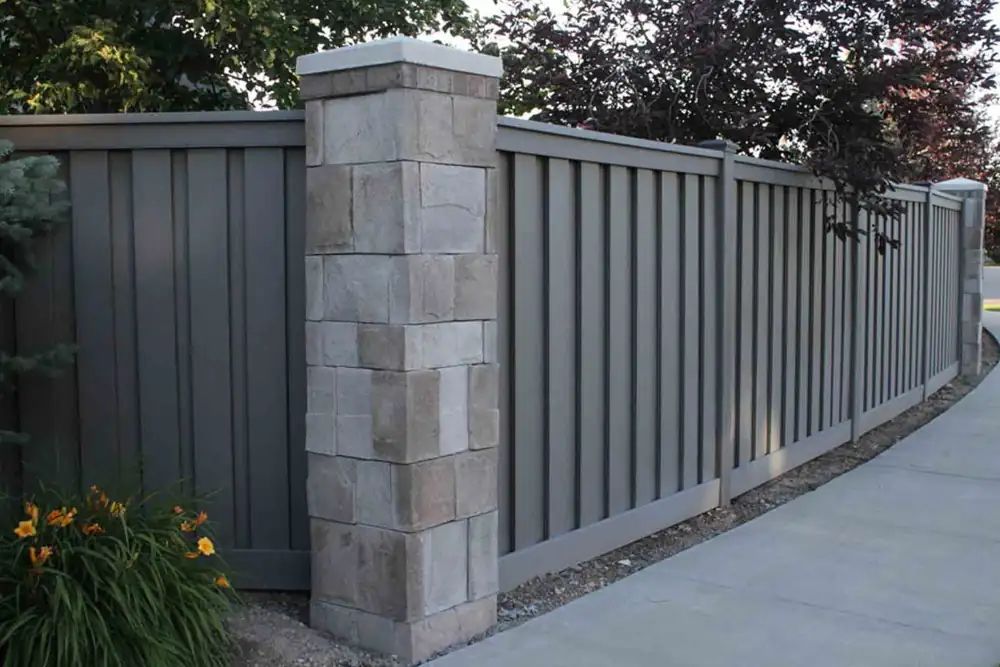
Horizontal boards look good next to stone, brick and black metal posts, which fits the mix of old and new houses around here.
What makes horizontal fences harder to build
This is the part most people don’t hear. A long board spanning between posts wants to sag over time, and wood boards can cup or twist as they go through humid summers and freeze-thaw winters. A wavy horizontal fence looks a lot worse than a slightly uneven vertical one, because your eye follows the line.
- Post spacing. Posts are generally set closer together than on a typical vertical fence so boards don’t span too far.
- Board choice. Thicker, straighter stock holds its line better. Cedar is a common pick for its stability.
- Frame or support. Many builds use a mid-support or framed panel to keep boards flat.
- Level lines. Every board has to run true. On a slope, we step the sections so the boards stay level instead of following the grade.
- Solid posts. Posts need to sit below the frost line, commonly around 30 to 36 inches in southeast Pennsylvania, so the whole run doesn’t shift in winter.
Material options
Cedar is the go-to for horizontal wood fences. It’s naturally stable and looks warm when stained, or it can weather to silver-gray if you leave it alone. See wood fences.
Composite boards hold their color and shape and skip the staining routine. They’re a strong fit for horizontal designs. See composite fences.
Vinyl and aluminum horizontal systems exist too, for low-maintenance modern looks. If you’re weighing the two, our vinyl vs. aluminum guide lays out the differences.
A scenario we run into
Say your backyard slopes gently from the house down toward a creek. A vertical fence could simply follow that slope. A horizontal fence can’t, because slanted boards look wrong. So we step it: each section sits level, and the tops drop in even increments down the hill. That leaves small triangular gaps at the bottom of each step, which we plan for so a dog can’t slip under. Near creeks, we also expect clay soil and a higher water table, which affects how we set posts. Our sloped yard guide goes into this more.
Gates that match
A horizontal gate should line up with the boards on either side of it, so the lines carry across the opening. Gates carry extra weight on one side, so they need a solid frame to keep from sagging. We build them to match the fence and swing cleanly. See our gates page for more on gate types.
Permits, neighbors and paperwork
A horizontal fence follows the same rules as any other fence in your township or borough. We check height limits and placement rules, handle the permit and HOA approval, and submit the PA One Call (811) request before any digging. If your home sits in a historic district, a modern horizontal fence facing the street may draw extra questions from the review board, so we’ll talk that through early.
Let’s look at your yard
We’ll come out for a free estimate, with no dispatch fee, and help you decide on spacing, material and layout. Most residential installs take about a day or two on site once materials arrive. Call 215-602-4334 to get started, or check your financing options first.
Get a straight answer on your fence.
Free on-site estimate, zero dispatch fees. We handle the permit, the HOA paperwork and the 811 call.