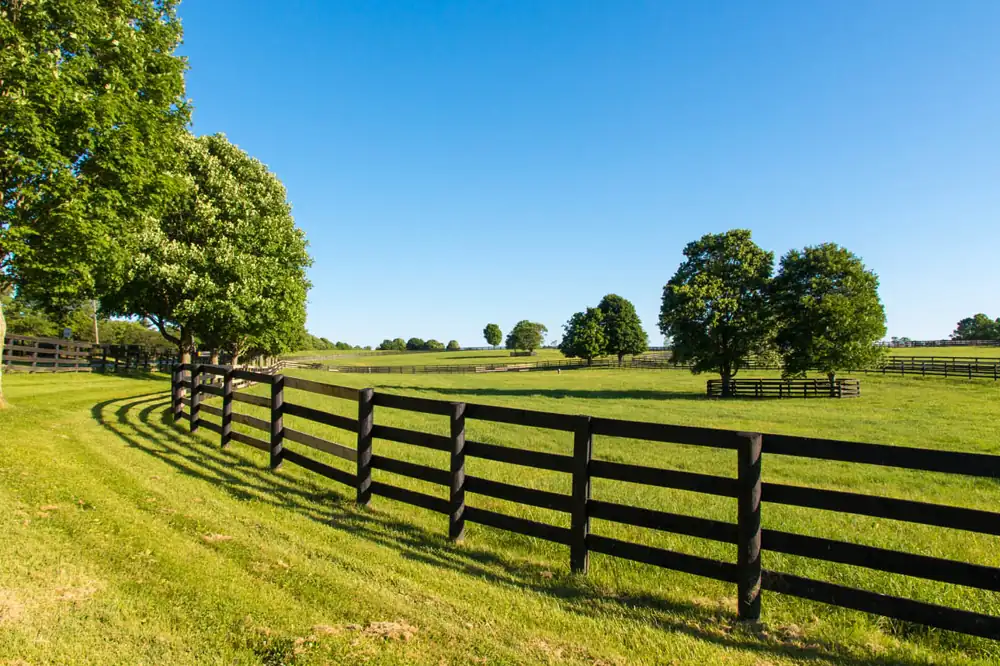
Some properties don’t need to be closed in. They need a line. Where the lawn ends and the meadow starts. Where the driveway meets the road. Where your land stops and the neighbor’s begins. A split rail fence does that with just a few rails and posts, and it looks right at home on the rolling ground of Bucks County. 76 FENCE BucksMont installs split rail fencing across Bucks County and eastern Montgomery County, from big rural lots in upper Bucks to front yards in established neighborhoods.
What split rail is (and isn’t) for
Split rail is an open fence. Rails sit in mortised posts, usually two or three rails high, with wide gaps between them. That makes it great for some jobs and a poor fit for others. Be honest with yourself about which one you need.
Good for
Marking property lines, lining driveways, framing gardens and front lawns, and guiding foot traffic without blocking views.
Better with mesh
Keeping a dog in. Adding welded wire mesh to the inside of a split rail fence turns it into a workable pet fence while keeping the rustic look.
Not for
Privacy, pool barriers or security. For those, see our privacy or pool fence pages.
Wood or vinyl?
Wood split rail is the traditional version. It has a rough, hand-split look that weathers naturally and fits old farmhouses and wooded lots. It’s usually the most budget-friendly way to fence a long line. Over time, wood rails can check and weather, and individual rails can be swapped out when needed. See wood fences.
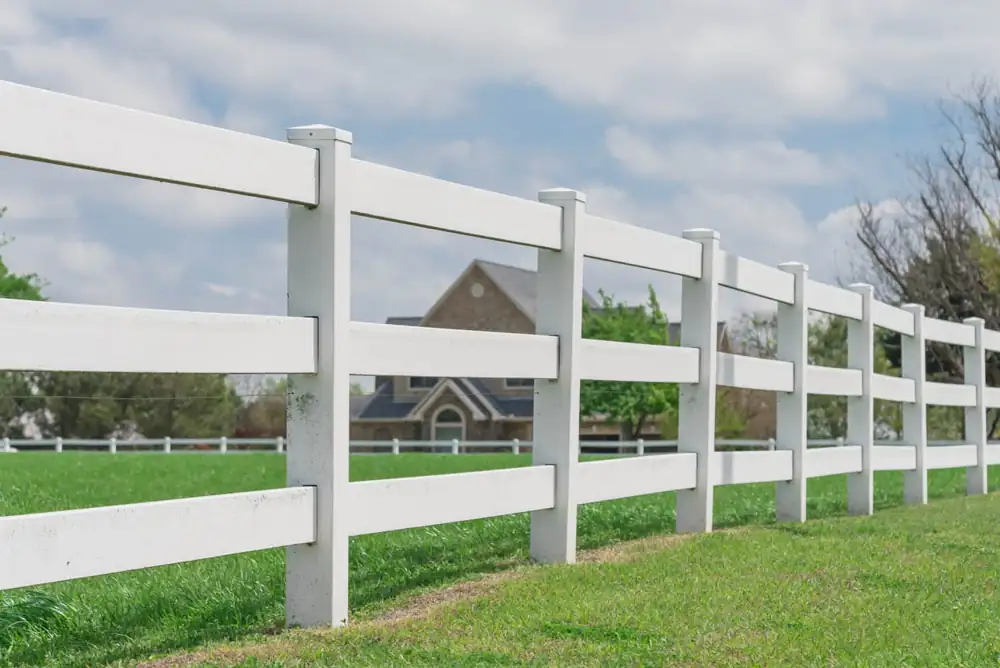
Vinyl post-and-rail gives a smoother, crisper look that stays white or tan without painting. It suits newer homes and HOA neighborhoods that want a uniform look. See vinyl fences.
Long runs over real ground
Split rail often means long distances. That brings its own challenges, and around here the ground is the biggest one.
- Rock and shale. Central and upper Bucks County have a lot of it. Post holes that should take minutes can take much longer. We plan for it.
- Rolling ground. Split rail follows the grade naturally, which is one reason it looks so good on hillsides.
- Stone walls and old trees. Older lots often have them right on the line. We work around them instead of through them.
- Frost. Frost depth in southeast Pennsylvania is commonly around 30 to 36 inches. Posts need to be set so freeze-thaw cycles don’t heave them.
- Floodplain areas. Near the Delaware River and some creeks, floodplain rules may affect what can go where. We check first.
Split rail and wildlife
A split rail fence won’t stop deer. It’s far too low and open. If you’re trying to protect a garden, orchard or young trees, you’ll need a tall deer fence, often 7 to 8 feet. Some homeowners use split rail along the front for looks and a taller deer fence around the garden out back. Our deer fencing page covers that. For horses and livestock, a board fence is usually the better choice; see horse and farm fencing.
Adding a gate
Split rail gates are usually simple walk-through or drive-through gates that match the rail style. If you’re lining a driveway, think about whether you want an opening only, or a gate you can close. We can match either. For a wide farm-style opening or something more substantial, our gates page covers the options.
Low upkeep, with a little attention
Split rail is about as low-maintenance as fencing gets. Once a year, walk the line. Look for rails that have slipped out of their mortises, posts that have leaned after a wet spring, and mesh that has pulled loose. Trim back brush and vines so the wood can dry out. Swapping a single rail is usually a quick fix, so there’s no reason to let one broken piece sit all season.
How we get it done
We start with a free on-site estimate, with no dispatch fee. We handle the permit, HOA approval if needed, and the PA One Call (811) request at least three business days before digging. Once materials arrive, most residential installs take about a day or two on site, though long rural runs or heavy rock can take longer. Call 215-602-4334 to set up a visit.
Get a straight answer on your fence.
Free on-site estimate, zero dispatch fees. We handle the permit, the HOA paperwork and the 811 call.