
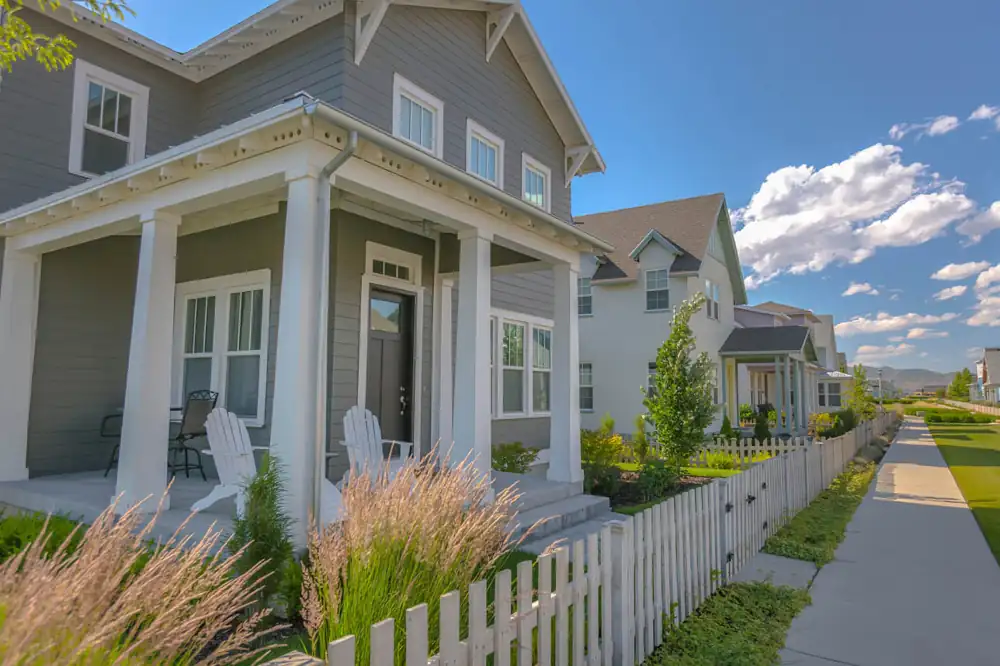
Here’s a scenario we see more than you’d think: someone puts up a fence, the neighbor comes home to find it, and suddenly two families who used to wave at each other aren’t talking. Usually nobody did anything wrong on purpose. They just skipped a few steps. This guide from 76 FENCE BucksMont covers the practical ways to keep the peace while getting the fence you want.
Start with the property line
The biggest source of fence disputes is simple: where exactly is the line? Old fences, hedges and stone walls often don’t sit on the true boundary, especially on older lots. What looks like “your side” might not be.
- Find your survey or plot plan. It may be in your closing documents.
- Look for property pins. Surveyors often set markers at corners. They can be buried or hidden under mulch.
- When in doubt, get a survey. If the line is unclear or there’s any chance of disagreement, a licensed surveyor can settle it before a single post goes in.
Many homeowners choose to set the fence a little inside their own line rather than right on it. That keeps the fence clearly on your property, though it means a strip of your yard ends up on the other side. Your township may also have rules on how close to the line a fence can go, which vary by municipality, so we check those for you. See our fence permits page.
Have the conversation first
You usually don’t need your neighbor’s permission to build a fence on your own property. But telling them ahead of time is one of the easiest ways to avoid hard feelings. A short, friendly heads-up covers most of it:
- Tell them what you’re planning. Material, rough height and where it will run.
- Explain why. “The dog keeps wandering” or “we want the patio to feel more private” lands better than silence.
- Ask if they have concerns. Drainage, a shared garden bed or a tree they care about can often be worked around.
- Mention the install day. The crew may need to stand on their side briefly to set posts. Asking first is just good manners.
Which side faces the neighbor?
With many fence styles, one side looks finished and the other shows the posts and rails. The common convention is to face the finished side outward, toward the neighbor and the street, and some municipalities and HOAs require it. Beyond the rules, it’s a nice gesture.
If you’d like both sides to look good, consider a style that’s the same on both faces, like many vinyl privacy panels, a board-on-board wood fence or aluminum. Browse privacy fence options for ideas.
Think about what your neighbor sees
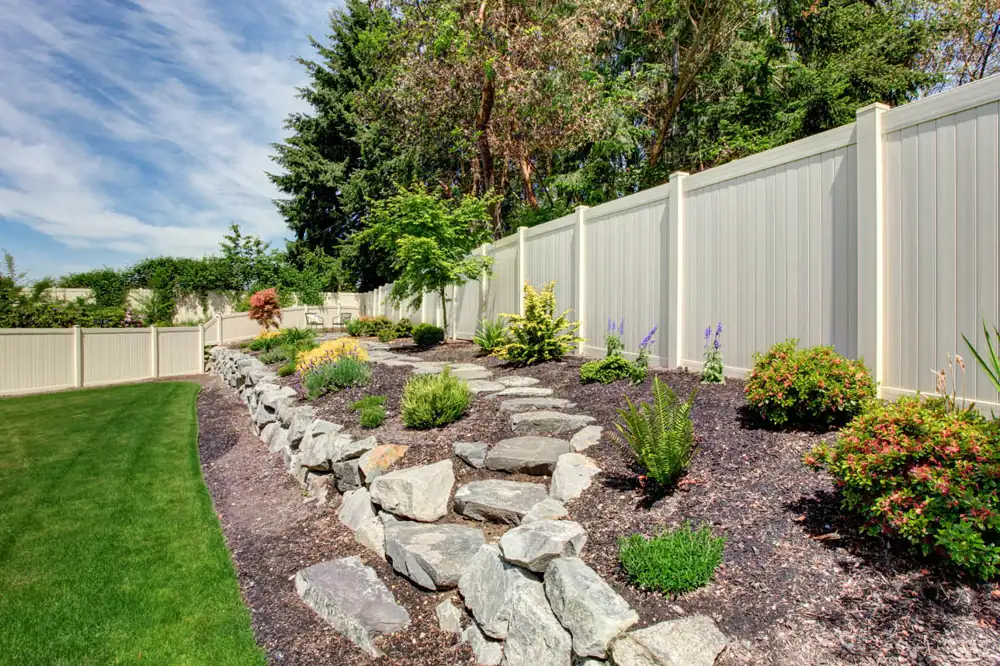
A six-foot solid wall right along a shared line can feel heavy to the house next door, especially on a small lot. A few ways to soften it:
Go semi-private
Spaced boards or a lattice top let light and air through while still blocking most views. See semi-privacy fences.
Only fence what you need
Full privacy by the patio, lower or more open fencing elsewhere.
Mind the drainage
A solid fence across a natural water path can push runoff where it didn’t go before. Leave a gap or choose an open style there.
Shared fences and cost splitting
Sometimes neighbors decide to share a fence and split the cost. That can work well, but get the details straight before anyone orders materials: who picks the style, whose property it sits on, who handles repairs down the road and what happens if one of you sells. Putting it in writing, even in a simple email, saves confusion later. We’re happy to walk both households through options at one estimate.
HOA rules
If you’re in a newer development, especially in growing areas like Warrington, check your HOA guidelines early. Many specify materials, colors, heights and where fences can go. Getting HOA approval before you build prevents the worst kind of neighbor problem: being told to take the fence down. We handle HOA approvals as part of the job. Learn more on our HOA fencing page.
After the fence is up
- Keep your side maintained, especially the side facing the neighbor.
- Trim vines and shrubs so they don’t pile onto their side.
- If a storm damages a section, fix it quickly before it falls into their yard.
- Keep gates latched so pets don’t end up visiting.
Let us help
We handle the permit, the HOA paperwork and the 811 utility request, and we’ll talk through layout choices that keep everyone comfortable. If a storm has already damaged a shared fence, our fence repair team can help. Book a free estimate or call 215-602-4334 for central and upper Bucks, or 610-477-7080 for lower Bucks and eastern Montgomery County.
Get a straight answer on your fence.
Free on-site estimate, zero dispatch fees. We handle the permit, the HOA paperwork and the 811 call.