When homeowners tell us they’re done staining a wood fence, the conversation usually lands on two options: vinyl or aluminum. Both skip the paint brush. Both handle our humid summers and freeze-thaw winters well. But they look and work very differently, and the right choice comes down to one main question: do you want to see through your fence or not? Here’s how 76 FENCE BucksMont helps you decide.
The quick difference
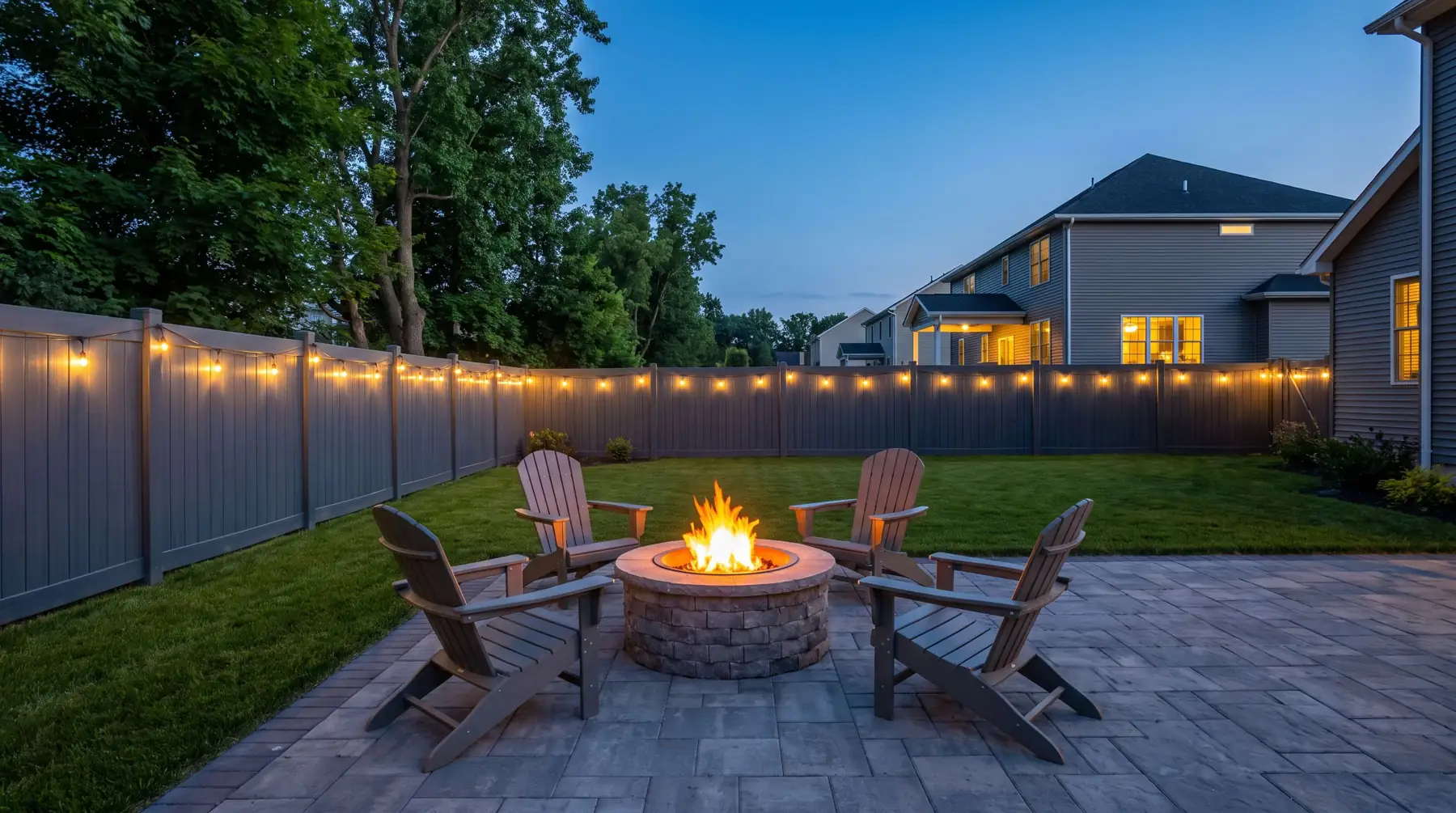
Vinyl (also called PVC) is best known for solid privacy panels and classic white picket fences. It blocks views, softens noise a little and gives you a clean, bright look.
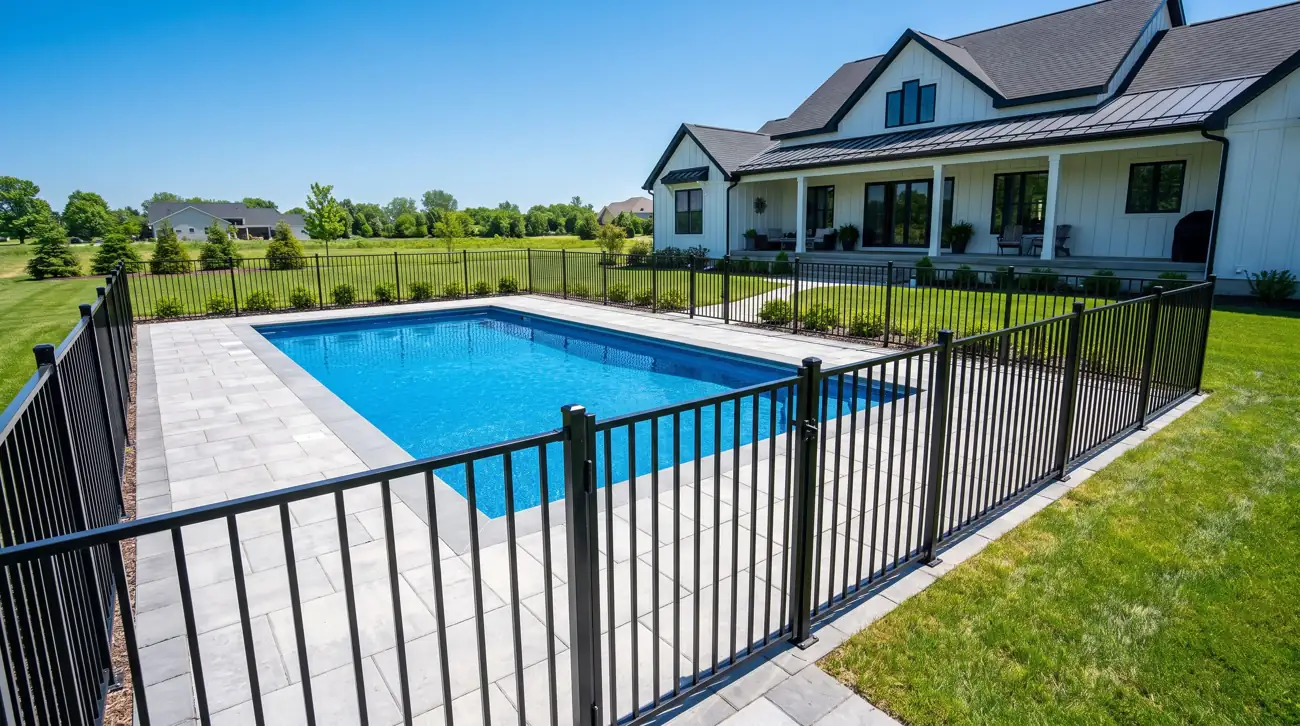
Aluminum is an open, ornamental metal fence, usually black, with vertical pickets. It marks a boundary and keeps kids and pets in, while leaving your view wide open.
Side by side
| Vinyl | Aluminum | |
|---|---|---|
| Privacy | Excellent in solid styles | Minimal; it’s see-through |
| Upkeep | Low: occasional wash | Low: occasional rinse |
| Rust or rot | Neither | Doesn’t rust |
| Pool fencing | Can work if it meets code | Very common choice |
| Slopes | Usually stepped | Often rackable within limits |
| Look | Clean, bright, classic or modern | Traditional wrought-iron style |
| Wind | Solid panels catch wind | Wind passes through |
When vinyl is the better call
Choose vinyl if privacy is the point. If the new house behind you looks straight onto your deck, or you want the backyard to feel like a room of its own, solid vinyl does that job well. It’s also a great fit for a crisp white picket out front, especially on a colonial or farmhouse.
- You want to block views from neighbors or a road
- You like a clean white, tan or gray look
- Your yard is fairly flat or gently sloped
- Your HOA allows it (many do; some specify colors)
See more on our vinyl fences page.
When aluminum is the better call
Choose aluminum if you want a boundary without a wall. It’s a favorite around pools, because it keeps the area secure while letting you see the water from the house. It also works well for front yards where you want curb appeal without hiding your home, and for properties with a view you don’t want to block, like a wooded lot or open farmland.
- You have a pool, or will soon
- You want to keep a view open
- Your yard slopes and you want the fence to follow it
- You like the look of wrought iron without the rust
See more on our aluminum fences page.
Pool fences: a closer look
Both materials can be used around a pool, but the fence has to meet code. Under Pennsylvania’s Uniform Construction Code, pool barriers must be at least 48 inches tall, and gates must be self-closing and self-latching and open away from the pool. The inspector has the final say. Aluminum is popular here because the see-through design lets you keep an eye on swimmers. Solid vinyl can also be used where it meets the requirements. Visit our pool fence page for more.
Weather and wind
Our spring storms and occasional nor’easters bring real wind. A solid vinyl fence catches that wind like a sail, so posts need to be set properly, below the frost line, which is commonly around 30 to 36 inches in southeast Pennsylvania, with local code governing. Aluminum lets wind pass through, so it handles gusts easily. Both are good at shrugging off humidity: vinyl won’t rot and aluminum won’t rust.
Living with each one
Think about daily life, too. Vinyl in white or light colors can show mildew on the shady side of the yard, especially near trees, so plan on a wash with a garden hose and a soft brush once or twice a year. It’s a quick job, but it’s a job. Aluminum rarely needs more than a rinse, and a black finish hides dirt well. If you have a dog that barks at everything that walks by, a solid vinyl fence cuts down on what the dog can see, which can mean a quieter yard. With aluminum, your dog sees the whole neighborhood.
Cost comparison
Vinyl and aluminum tend to land in a similar moderate-to-higher range compared to wood or chain link, and the difference depends on height, style, gates and your yard. Tall privacy vinyl uses more material per foot than a four-foot aluminum fence, for example. Our fence cost guide covers the factors, and financing is available through Wisetack.
Our honest take
Pick based on what the fence has to do. Privacy points to vinyl. Visibility points to aluminum. If you’re still torn, book a free estimate and we’ll look at your yard with you, or call 215-602-4334.
Get a straight answer on your fence.
Free on-site estimate, zero dispatch fees. We handle the permit, the HOA paperwork and the 811 call.