Nobody wants to replace a fence twice. But ask around your neighborhood and you’ll hear wildly different stories: one person’s pine fence is leaning after a handful of years, while the fence two doors down has stood for decades. The difference usually comes down to three things: the material, how it was installed and how it’s been cared for. Here’s what 76 FENCE BucksMont tells homeowners when they ask how long a fence will last.
What our climate does to a fence
Southeast Pennsylvania is hard on outdoor materials. Humid summers keep wood damp and invite rot and mildew. Freeze-thaw winters make the ground expand and contract, which can push shallow posts up and out of line. Heavy spring storms and the occasional nor’easter bring wind loads and falling limbs. And in lower spots near creeks, clay soils and high water tables keep post bases wet. A fence that lasts here has to handle all of that.
Typical lifespan by material
These are general, widely cited ranges, not guarantees. Your fence could do better or worse depending on the factors below.
| Material | General lifespan | Main enemy |
|---|---|---|
| Pressure-treated pine | Often around 10 to 15 years | Moisture, rot at the ground line, warping |
| Cedar | Often around 15 to 20 years | Moisture over time; weathering if unsealed |
| Vinyl / PVC | Often 20 years or more | Impact damage, poor installation |
| Aluminum | Often several decades | Physical damage, not rust |
| Ornamental steel | Often decades with care | Scratches in the coating that let rust start |
| Chain link (galvanized or vinyl-coated) | Often 15 to 20 years or more | Corrosion over time, bent fabric |
| Composite | Often 20 years or more | Varies by product |
Want to go deeper on any one material? See our pages on wood, vinyl and aluminum fences.
Installation matters as much as material
A long-lasting material installed poorly will fail early. A few things make the biggest difference:
- Post depth. Posts need to go below the frost line, commonly around 30 to 36 inches in southeast Pennsylvania, with local code having the final word. Shallow posts heave.
- Drainage at the base. Water that pools around a post, especially a wood post, speeds up rot. Proper setting helps shed water away.
- Gate framing. Gates take the most abuse. Strong framing and good hardware keep them from sagging.
- Ground clearance. Wood boards touching soil wick up moisture. A small gap at the bottom helps.
Upkeep that actually extends life
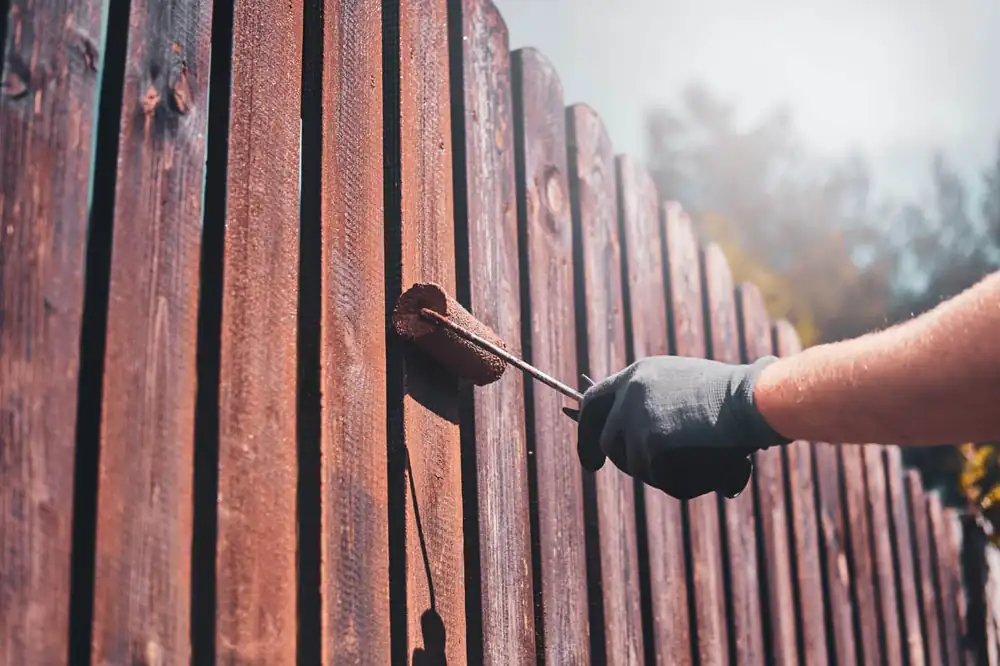
Wood: Stain or seal every few years. Keep sprinklers from hitting the boards. Trim back vines and shrubs so the fence can dry out after rain. Replace a cracked board before it becomes a leaning section.
Vinyl and composite: Rinse off mildew and dirt once or twice a year. Check gate hardware.
Aluminum and steel: Rinse occasionally. On steel, touch up scratches in the finish quickly to keep rust from starting.
Chain link: Check for loose ties and bent fabric, especially after storms.
Repair or replace?
If the problem is a few boards, a single panel or one damaged section, repair usually makes sense. One of our customers had a storm take out five panels of a privacy fence that was over 35 years old, and our crew restored it. But when posts are rotting across the whole line, or the fence leans in multiple places, you’re often better off replacing. Our fence repair and fence replacement pages walk through how we make that call.
Signs your fence is near the end
Fences rarely fail all at once. They give you warnings. Watch for posts that wobble when you push on them, rot you can press a screwdriver into at the base of a wood post, sections that lean after every storm, gates that need to be lifted to latch, and vinyl or composite panels that crack or pop out of their rails. One or two of these is usually a repair. Several at once, across the whole line, usually means the fence has done its job and it’s time to plan the next one.
Warranty coverage
We offer and honor manufacturer warranty coverage on every fence we install. Coverage varies by manufacturer and material, and we’ll go over the details with your quote so you know what’s covered.
Choosing for the long haul
If you plan to stay in your home a long time, low-maintenance materials like vinyl, aluminum and composite can pay off over the years, even if they cost more upfront. If you like the look of wood and don’t mind a weekend with a sprayer every few years, cedar is a great choice. Check our fence cost page to see how upfront and lifetime cost compare, then book a free estimate or call 215-602-4334.
Get a straight answer on your fence.
Free on-site estimate, zero dispatch fees. We handle the permit, the HOA paperwork and the 811 call.