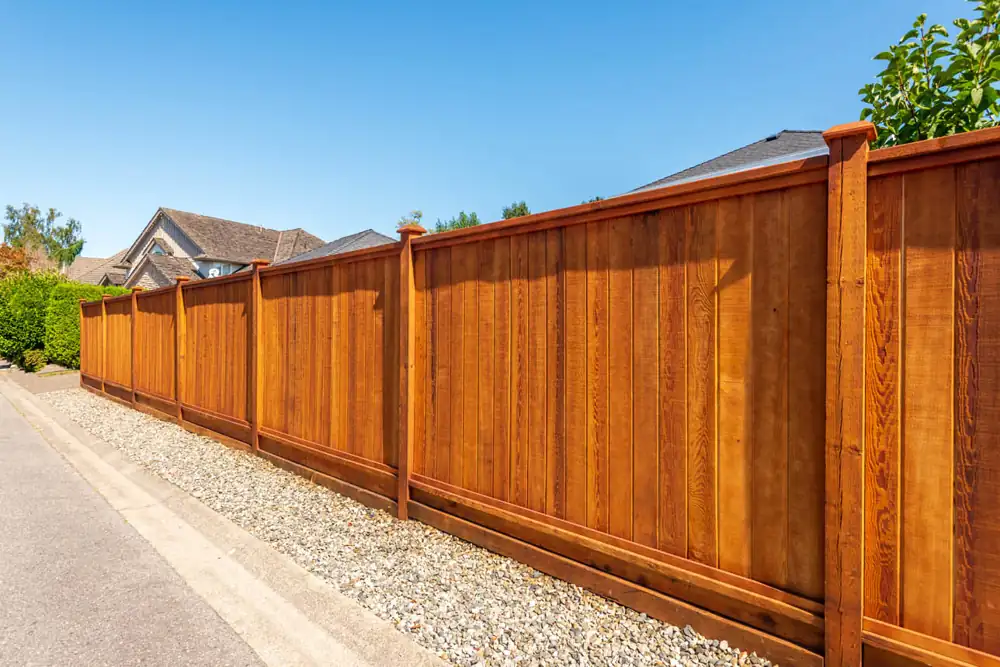
Wood is the fence most people picture when they think of a backyard. It looks natural next to old stone walls and mature trees, it can be built in almost any style, and it usually costs less up front than vinyl or composite. The catch is upkeep. 76 FENCE BucksMont builds cedar and pressure-treated pine fences across Bucks County and eastern Montgomery County, and we’ll help you decide if wood is worth it for your yard.
Cedar or pressure-treated pine?
Cedar
Naturally resists rot and insects, stays relatively stable, and has that warm color and smell. It weathers to a soft silver-gray if left alone. It usually costs more than pine.
Pressure-treated pine
Treated to resist rot and insects, strong and budget-friendly. It’s commonly used for posts and rails, even on cedar fences. It can shrink or check (small surface cracks) as it dries.
Many wood fences combine the two: pressure-treated posts in the ground, with cedar boards or pickets where appearance matters most.
Styles wood does best
Wood can be cut and assembled into almost anything. Popular choices include:
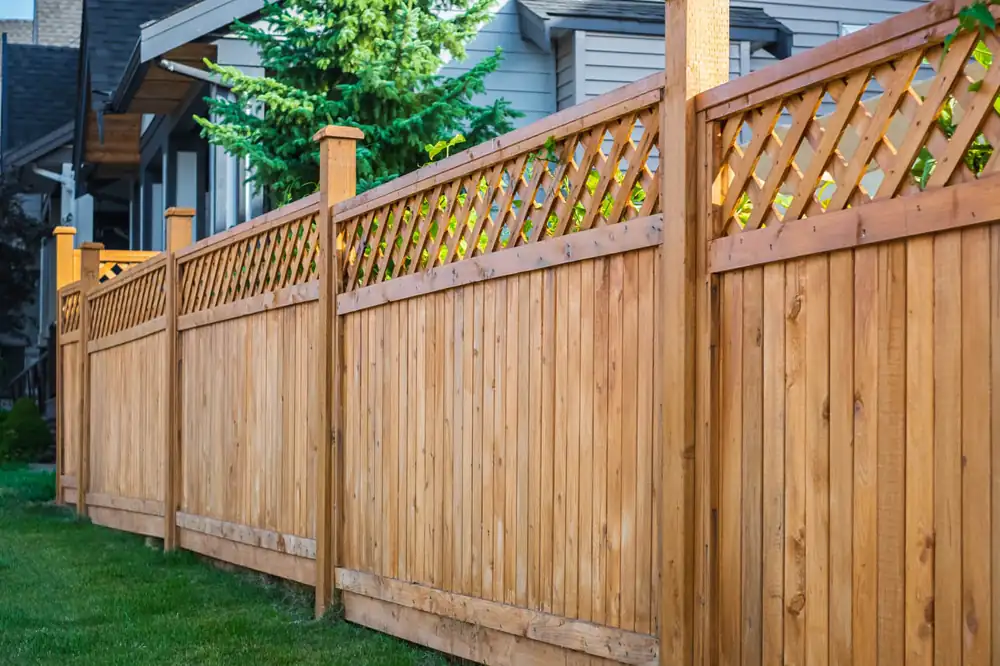
- Solid board privacy fences, sometimes with a lattice top
- Horizontal slat fences for a modern look
- Traditional picket fences for front yards and older streets
- Split rail for open, rural property lines
- Board fence for horses and farm properties
The honest part: upkeep
Wood needs care to last. In our humid summers, shady and damp spots can grow mildew and moss, and boards that stay wet near the ground are the first to rot. Freeze-thaw winters can loosen fasteners and push on posts. None of that means wood is a bad choice. It means you should plan for it.
- Stain or seal on a regular schedule to slow weathering and moisture damage
- Keep soil, mulch and leaves from piling against the boards
- Trim shrubs back so the fence can dry out after rain
- Check gates and hinges each spring and tighten anything loose
Building wood fences for our ground
Posts are where wood fences fail first. Around Doylestown, Chalfont and upper Bucks, shale and rock sit close to the surface. Near creeks, heavy clay holds water against the posts. Our crew sets posts with local frost depth in mind, commonly around 30 to 36 inches in southeast PA, and pays attention to drainage at the base. Local code always governs, and we handle the permit and 811 request.
A few real-world examples
If you own an older home with a stone foundation and a deep lot, a cedar privacy fence along the back and a simple painted picket out front can look like it has always been there. If you have a few acres near Quakertown or Buckingham, a board fence or split rail marks the line without blocking the view of the fields. If your backyard is small and close to the neighbors, a horizontal cedar fence gives privacy with a cleaner, more modern look. And if your yard slopes, wood can be built to step down the hill or follow the grade, which gives it more flexibility than many panel systems.
Wood is also easy to repair. A broken board or picket can usually be swapped out on its own, without replacing a whole panel. That’s a real advantage when a limb comes down in a storm.
When wood isn’t the right fit
If you know you won’t stain every few years, or the fence line sits in deep shade that never dries, consider vinyl or composite. You’ll pay more up front but spend less time on maintenance. We’ll give you the honest comparison.
Wood fences and neighbors
Wood fences have a “good side” with smooth boards and a back side where the posts and rails show. Many municipalities and HOAs expect the finished side to face out. Board-on-board and shadowbox styles look good from both sides, which can make neighbors happier. Our good neighbor fence tips cover more.
Get a wood fence estimate
Estimates are free, with no dispatch fee, and financing is available through Wisetack. We offer and honor manufacturer warranty coverage on every fence we install. Call 215-602-4334 for central and upper Bucks County, or 610-477-7080 for lower Bucks and eastern Montgomery County.
Get a straight answer on your fence.
Free on-site estimate, zero dispatch fees. We handle the permit, the HOA paperwork and the 811 call.