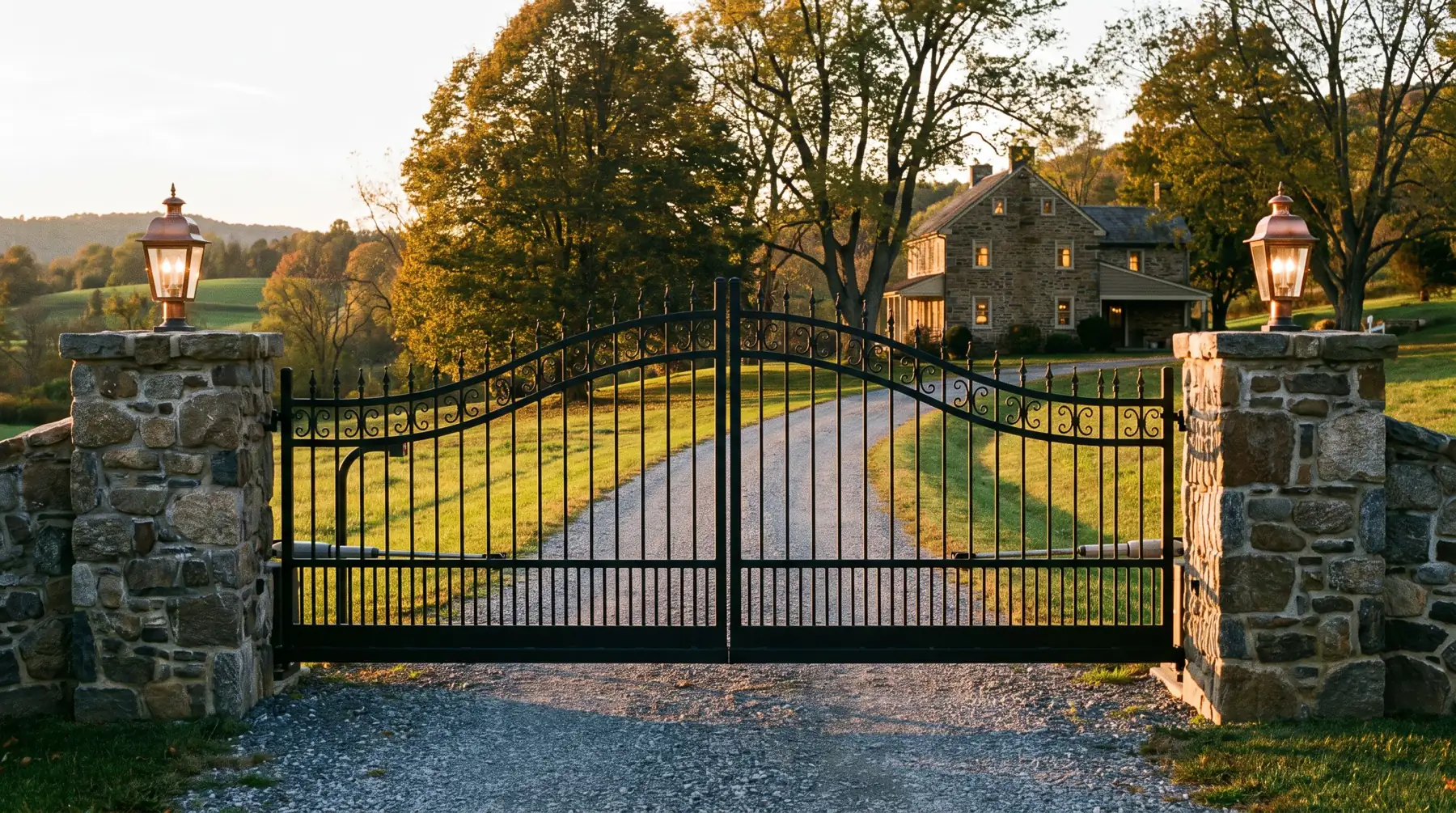
A driveway gate does a few things at once. It marks the entrance, keeps kids and dogs from heading down the lane toward the road, discourages people from turning around in your driveway and gives you control over who comes onto the property. On the larger lots common in Buckingham, Upper Makefield and around Quakertown, that matters. 76 FENCE BucksMont installs manual and automatic driveway gates across Bucks County and eastern Montgomery County, for homes and businesses.
Swing or slide?
This is the first real decision, and your driveway usually makes it for you.
Swing gates
Single or double leaves that swing open like doors. They look classic between stone pillars. They need clear space to swing and work best on fairly level ground, since a gate swinging uphill hits the driveway.
Sliding gates
One panel that rolls sideways along the fence line. Good for sloped driveways, short setbacks and tight spaces. They need room alongside the opening for the gate to slide into.
What goes into an automatic gate
An automatic gate is part fence, part machine. Along with the gate itself, it needs:
- An operator. The motor and arm or track that moves the gate, sized for the gate’s weight and length.
- Power. Usually a line run to the gate, sometimes with solar as an option depending on the site.
- Access controls. Remotes, keypads, intercoms or phone-based access, depending on how you want to let people in.
- Safety features. Sensors and reversing functions so the gate won’t close on a car, person or pet.
Materials and style
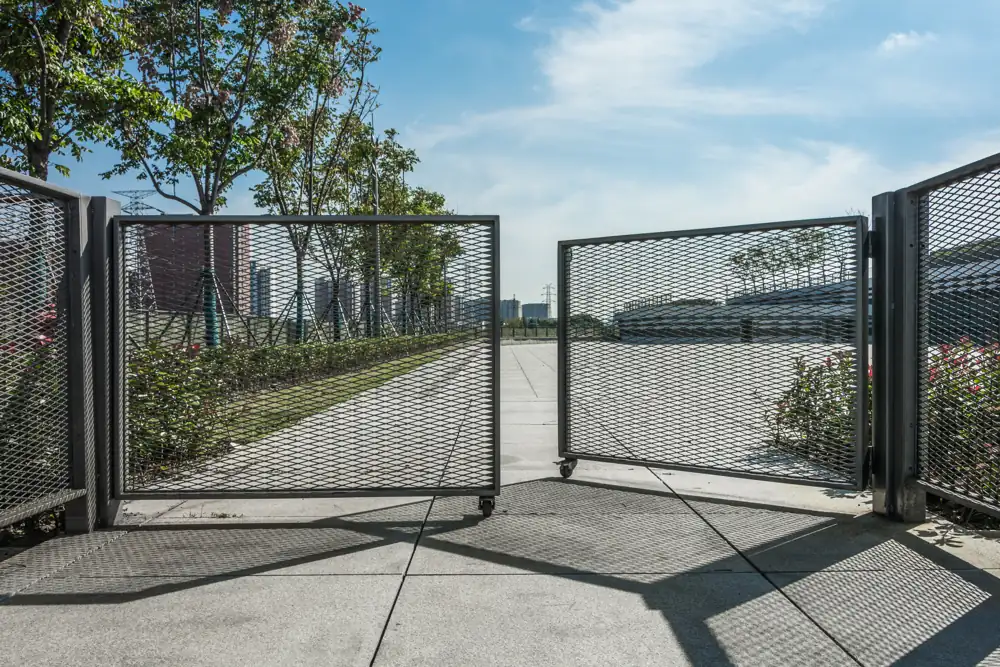
Ornamental steel is the classic material for driveway gates: strong, heavy and good-looking with finials or spear tops. Aluminum is lighter, which is easier on the operator, and won’t rust. Solid steel or wood-look panels give you privacy at the entrance. We’ll match the gate to your house and any fencing that runs off it.
A scenario to think about
Say your driveway rises from the road toward the house. A swing gate opening inward would hit the rising pavement. You could set the gate farther up the drive, where it’s flatter, or use a sliding gate along the road. Or maybe a delivery truck needs to pull fully off the road before the gate opens, so the gate needs to sit back from the street. These are the kinds of things we sort out on site before anything gets ordered.
Local things to plan around
- Setback and permits. Your township decides where a gate can go and what permits are needed. We check and handle the paperwork, including HOA approvals.
- Historic districts. In boroughs like Doylestown, New Hope and Newtown, gates visible from the street may need architectural review.
- Frost and ground. Gate posts and pillars carry a lot of weight. Frost depth here is commonly around 30 to 36 inches, and shale and clay both affect how footings are set.
- Digging safely. Power lines to the gate mean trenching. We submit the PA One Call (811) request at least three business days before digging.
- Snow. Plows and drifting snow can block a gate. Plan where the plowed snow will go.
Keeping an automatic gate running
An automatic gate has moving parts, so it needs a little attention. Keep the track of a sliding gate clear of gravel, leaves and ice. Check that hinges and rollers move freely and that the safety sensors aren’t blocked by plants or snow. Listen for new grinding or clunking noises, which usually mean something needs adjusting. And test the gate’s manual release, so you know how to open it by hand if the power goes out during a storm.
Manual gates are fine too
Not every driveway needs a motor. A well-built manual gate can be the right call for a farm lane or a secondary entrance. We can always plan the posts and power so you can automate later. See our general gates page for other options, or our security fence page if access control is the main goal.
Next step
We’ll look at your entrance, measure, and talk through swing versus slide, materials and access control. The estimate is free, with no dispatch fee. Automatic gates are a bigger investment, and financing through Wisetack is available. Call 215-602-4334 to schedule.
Get a straight answer on your fence.
Free on-site estimate, zero dispatch fees. We handle the permit, the HOA paperwork and the 811 call.