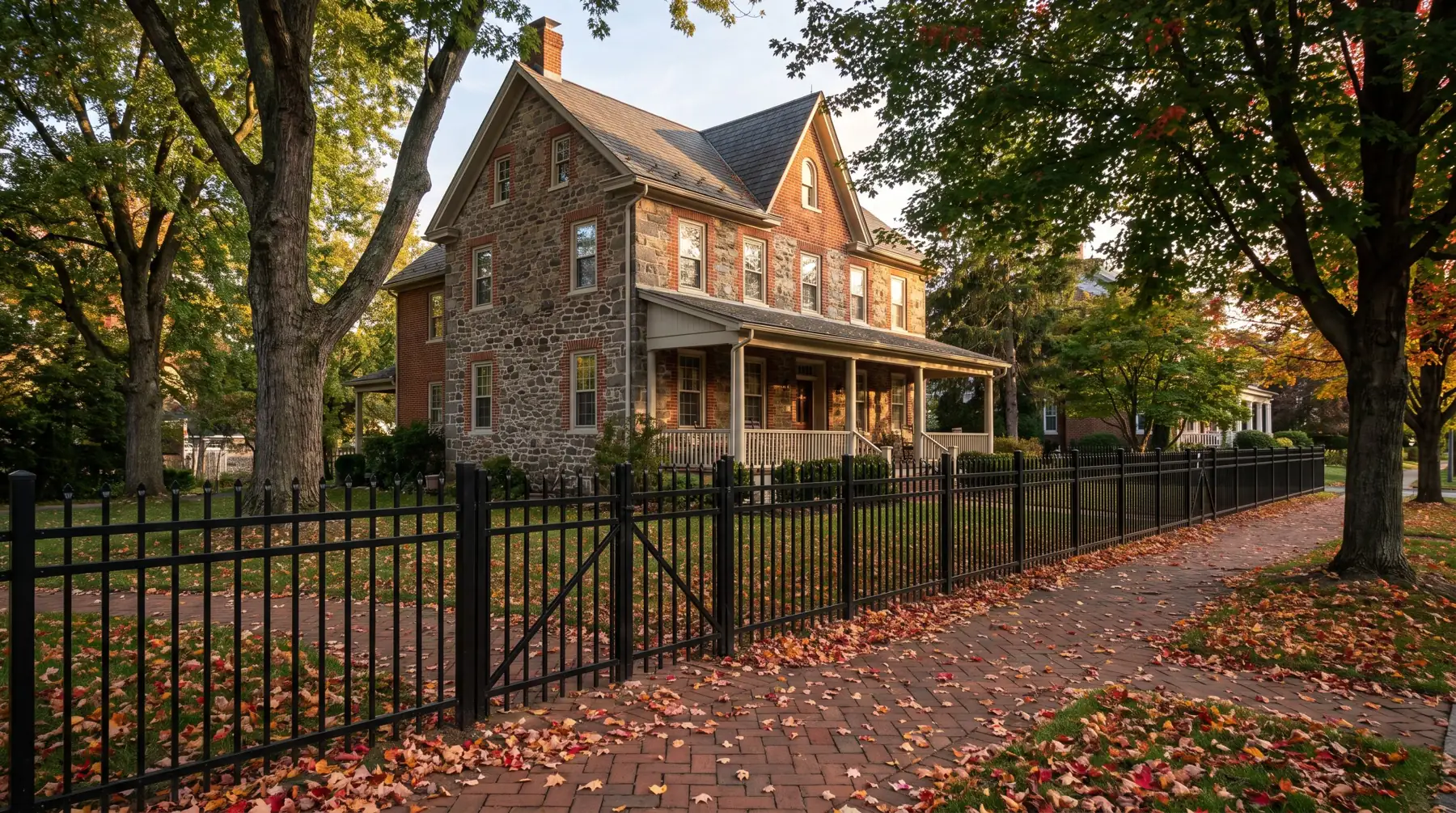
If you live on one of the older streets in Doylestown, New Hope or Newtown, you already know the appeal: stone houses, deep porches, brick sidewalks and a sense that the neighborhood has been there a long time. That character is exactly why some boroughs with historic districts review changes you can see from the street, and a new fence can be one of them. This guide from 76 FENCE BucksMont walks through what that means for you, in practical terms.
Does my fence need architectural review?
Maybe. Here’s the general picture. Most townships and boroughs in Bucks and Montgomery County require a zoning or fence permit for a new fence. On top of that, boroughs with historic districts, such as Doylestown, New Hope and Newtown, may require architectural review for fences visible from a public street. In Pennsylvania, that review is often handled by a board commonly called a HARB (Historical Architectural Review Board), which advises the borough on whether a change fits the district.
Whether your fence needs review depends on where your property sits, where the fence goes and whether it can be seen from the street. A backyard privacy fence hidden behind the house may be treated differently than a front-yard picket along the sidewalk. The only way to know for sure is to check with your municipality, and that’s something we do for every job.
What review boards tend to look at
Every board has its own guidelines, and we won’t pretend to know yours in advance. But in general, historic review focuses on whether a fence fits the look and scale of the street. Common questions include:
- Material. Does it look appropriate for the era of the house? Wood picket and metal fences with a traditional profile are often a comfortable fit on older streets.
- Height and openness. Front-yard fences on historic streets are often expected to be lower and more open, so the house stays visible.
- Style and detailing. Picket shape, post caps, spacing and color all play into how “period-appropriate” a fence reads.
- Location. How the fence relates to the sidewalk, the house and neighboring properties.
Styles that usually suit older homes
Without speaking for any specific board, here are styles that tend to look at home on historic streets:
Wood picket. The classic. Painted or natural, with a traditional picket top, it fits colonial, Victorian and farmhouse architecture. See our picket fence page.
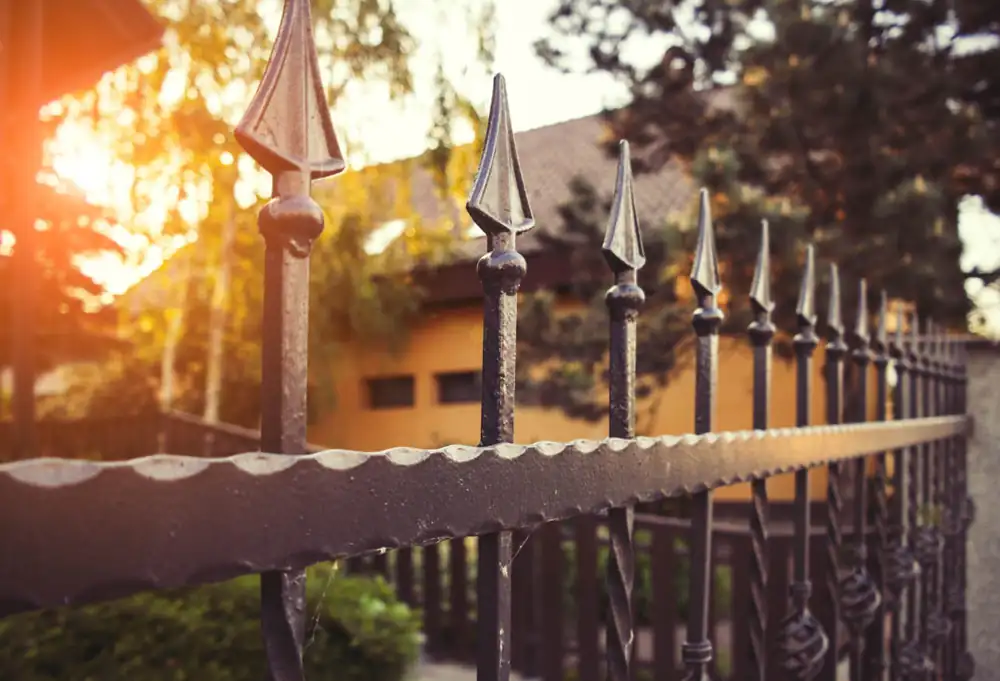
Ornamental metal. Black aluminum or ornamental steel with a simple spear or finial top echoes the iron fences you see on older streets, without the rust upkeep of true wrought iron. Learn more about ornamental steel.
Low stone-and-rail combinations. If your lot already has an old stone wall, a fence that works with it instead of replacing it can be a good fit.
What about vinyl?
Vinyl is low-maintenance and popular, but in a historic district it may face more questions because it can read as modern up close. Some boards may accept it in certain spots, like a rear yard out of public view, and some may not. We’ll help you figure out where vinyl makes sense and where wood or metal might be the smoother path. Our vinyl vs. aluminum guide compares two common options.
How the process usually goes
- Design with the district in mind. At your estimate, we talk about what you want and what’s likely to fit. We’ll bring up any concerns early.
- Gather the details. Review applications typically want a site plan showing where the fence goes, plus information on material, height and style. Photos or manufacturer drawings help.
- Submit and wait. Review boards meet on their own schedules, so this step can add time. Plan ahead, especially if you want the fence up by a certain season.
- Permit and 811. Once approved, the fence permit and the PA One Call (811) request move forward. We handle both.
- Install. Most residential installs take about a day or two on site once materials arrive.
Practical things to watch for on older lots
Historic properties come with their own quirks. Mature trees with big roots near the property line, old stone walls, buried remnants of earlier fences and uneven ground are all common. Post locations may need to shift a bit to avoid roots or foundations. Older lots can also have property lines that don’t match what the old fence suggests, so a survey is worth having. And like everywhere else in the region, posts need to go below the frost line, commonly around 30 to 36 inches in southeast Pennsylvania, though local code governs.
We handle the paperwork
You shouldn’t have to become a zoning expert to put up a fence. 76 FENCE handles permits, HOA approvals and the 811 request as part of the job, and we’ll help you prepare what the borough asks for. Read more on our fence permits page, or see what we do in Doylestown, New Hope and Newtown.
Call 215-602-4334 for Doylestown and New Hope, or 610-477-7080 for Newtown, and we’ll take a look.
Get a straight answer on your fence.
Free on-site estimate, zero dispatch fees. We handle the permit, the HOA paperwork and the 811 call.