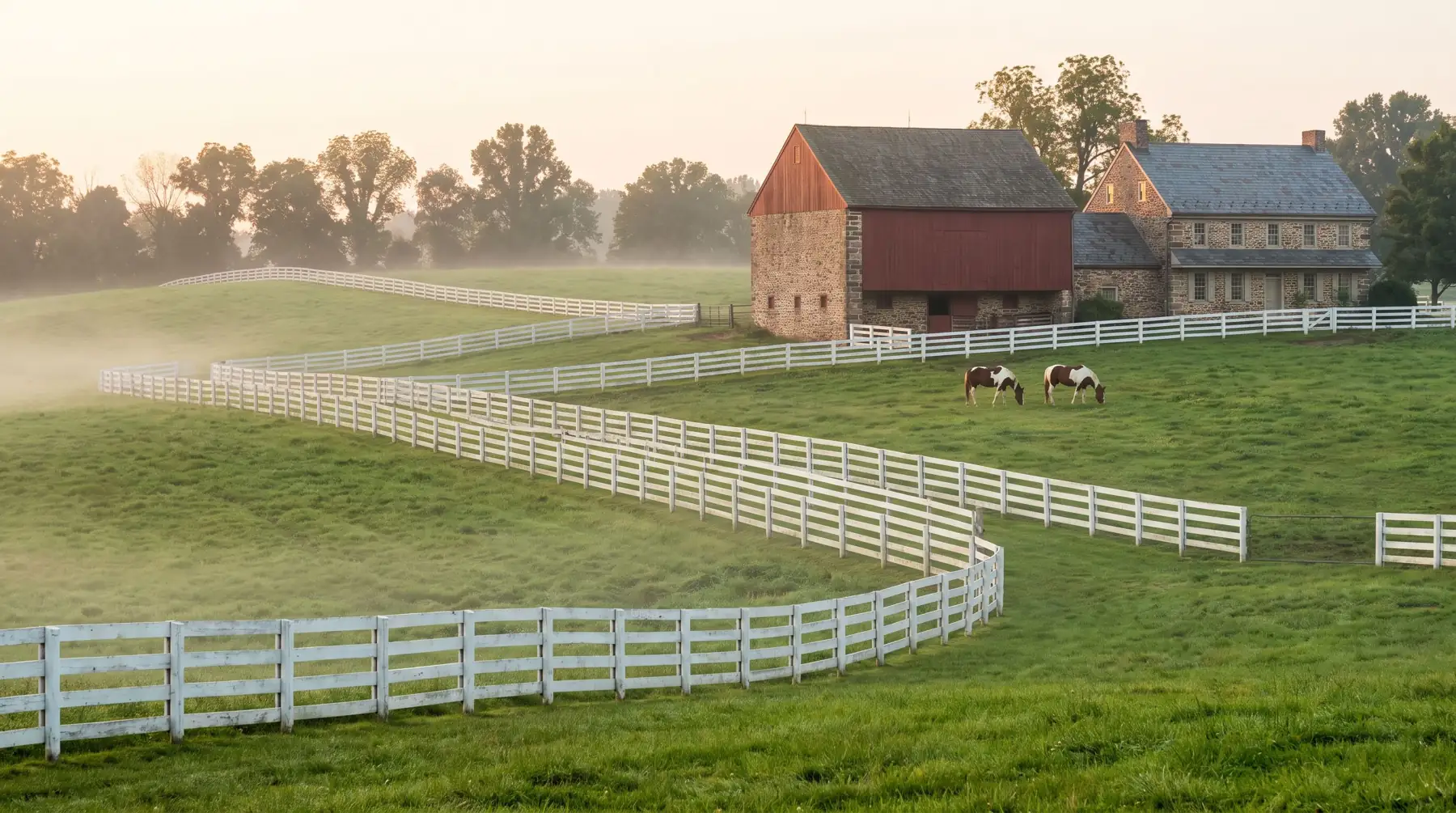
Bucks County still has a lot of working land. Farmland around Buckingham, hobby farms with a few goats, bigger rural lots around Quakertown where the pasture runs down to a tree line. Fencing that kind of property isn’t the same as fencing a backyard. The runs are longer, the ground rolls and the fence has to stand up to animals leaning on it every day. 76 FENCE BucksMont installs horse and farm fencing across Bucks County and eastern Montgomery County, and we plan each job around the animals and the land.
Start with the animals
The right farm fence depends on what it has to hold. Tell us what’s in the field now and what might be there later.
Horses
Horses need a fence they can see clearly and one that won’t cut them if they run into it. Board fence is the traditional choice for good reason: it’s visible, solid and forgiving.
Smaller livestock
Goats, sheep and similar animals slip through wide gaps. Adding wire mesh to a board or post-and-rail fence closes those gaps.
Just the look
No animals? Plenty of owners want the classic white board look along road frontage or a long driveway. That’s a perfectly good reason too.
Board fence: wood or vinyl
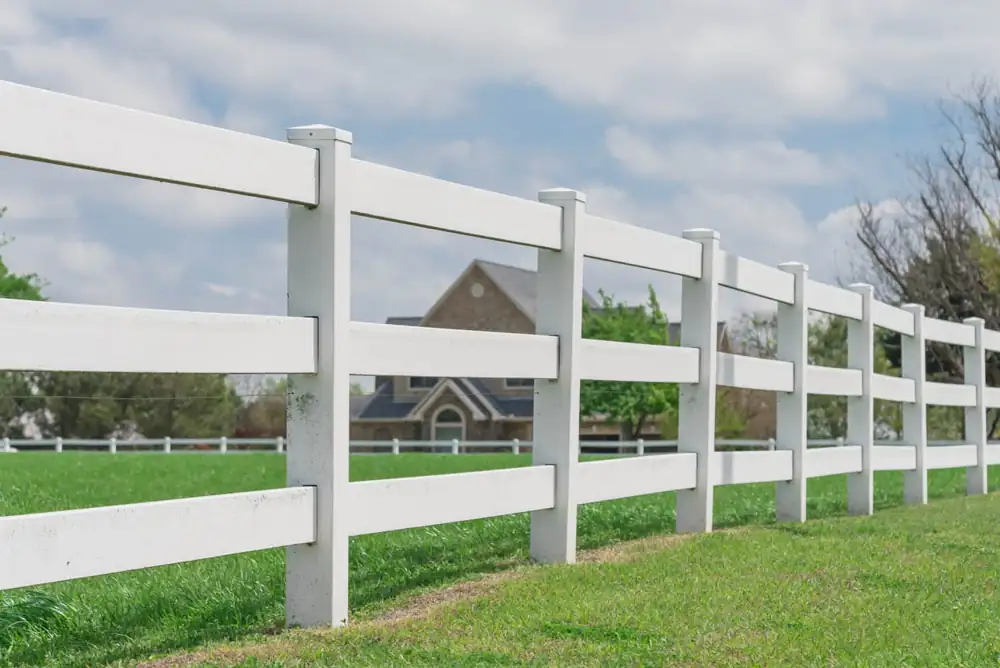
Wood board fence is the classic. Painted white or black, or left natural, it looks like it belongs on a bank barn property. Pressure-treated boards are a common, cost-effective choice for long runs. Wood needs repainting or sealing over time, and horses sometimes chew it. See wood fences.
Vinyl board fence keeps the look without the painting. It’s popular for road frontage where appearance matters and nobody wants to paint a quarter mile of fence. See vinyl fences.
For simpler property lines on acreage, a split rail fence is another option.
The land decides a lot
Here’s where local experience matters. The ground in our area isn’t uniform, and a long fence run crosses a lot of it.
- Shale and rock. Common in central and upper Bucks. It slows post setting and sometimes means adjusting post locations.
- Wet ground. Low pasture near creeks tends to have clay soil and a high water table. Posts there need extra attention to stay put.
- Rolling hills. Board fence follows the grade, but steep dips and crests need planning so there are no gaps at the bottom.
- Frost. Frost depth in southeast Pennsylvania is commonly around 30 to 36 inches. Posts set too shallow get heaved out of line by freeze-thaw winters.
- Floodplain. Properties along the Delaware River and some creeks may fall under floodplain rules. We check before planning a run.
- Stone walls and hedgerows. Old farms often have them right along the line. We work with them.
Gates on a farm
Farm gates get used hard. Tractors, trailers, feed deliveries and animals all come through. Plan gate widths for the biggest thing that needs to pass, and put gates where the ground is firm and dry, not in the low spot that turns to mud every spring. Corner gates can make moving animals easier. Our gates page covers the options.
What about deer?
Deer pressure is heavy across Bucks County. A board fence won’t keep them out; they’ll hop it without slowing down. If you’re protecting an orchard, vegetable garden or young trees on the property, pair your farm fence with a dedicated deer fence. It has to be tall, often 7 to 8 feet. See our deer fencing page.
How a farm fence job runs
- Walk the property. We look at the lines, gates, ground and animals with you. The estimate is free, with no dispatch fee.
- Handle the paperwork. We manage permits and the PA One Call (811) request at least three business days before digging.
- Build. Long rural runs take longer than a typical backyard, and rock or wet ground can add time. We’ll give you a realistic schedule, and weather can shift it.
Big farm jobs are a real investment. If it helps, financing is available through Wisetack, and you can check your options online in minutes. Call 215-602-4334 to set up a walk-through.
Get a straight answer on your fence.
Free on-site estimate, zero dispatch fees. We handle the permit, the HOA paperwork and the 811 call.