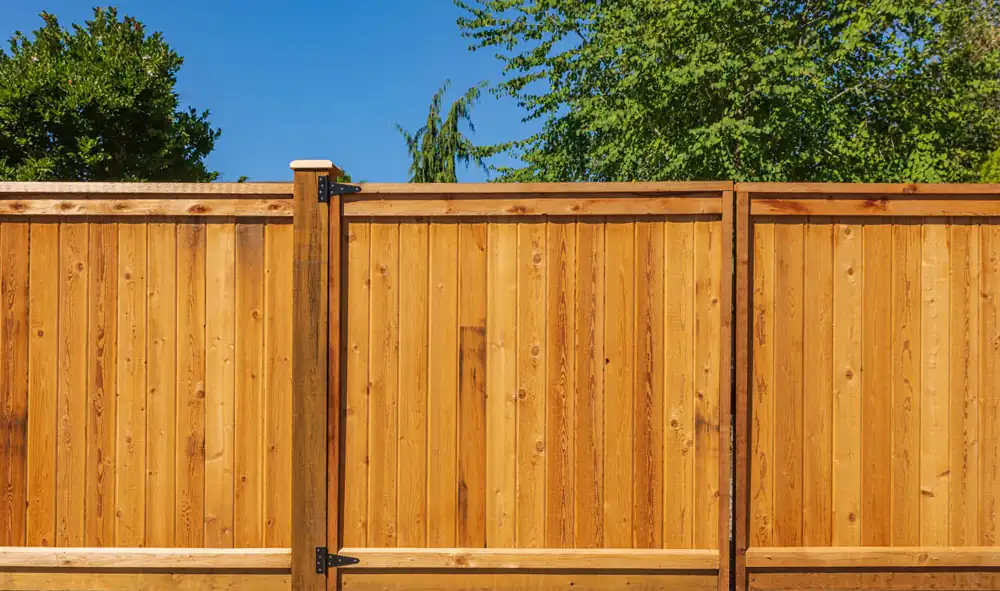
You’ll walk through your gate far more often than you’ll look at the rest of your fence. When a gate drags on the ground, won’t latch, or needs a hip bump to close, it’s the first thing you notice and the thing that drives you crazy. Most gate problems come down to how the gate was sized, built and hung. 76 FENCE BucksMont installs gates for new fences and existing ones across Bucks County and eastern Montgomery County, and we treat the gate as the most important part of the job.
Why gates sag, and how we prevent it
A gate hangs off one side. All its weight pulls on the hinge post and tries to rack the frame out of square. Over time, the latch side drops, the gate drags and the latch misses. Here’s what keeps that from happening:
- A strong hinge post. Set deep and solid. Frost depth in southeast Pennsylvania is commonly around 30 to 36 inches, and a gate post that heaves in winter throws the whole gate off.
- A rigid frame. Proper bracing, or a metal frame on wood gates, so the gate holds its shape.
- Hardware rated for the weight. Heavy gates need heavy hinges. Undersized hardware fails early.
- The right width. Wide single gates are harder to keep square. Past a certain width, a double gate often works better.
Types of gates we install
Walk gates
Single gates for people, kids and dogs. Size them for how you use them: a wheelbarrow needs more room than a person.
Double gates
Two leaves that open wide for mowers, small tractors, trailers or a car. One side can stay closed for daily walk-through use.
Sliding gates
Useful where there’s no room for a gate to swing, like a driveway that slopes up or a tight side yard.
Automatic gates
Motorized swing or slide gates for driveways and commercial entrances. See driveway gates.
Materials
Gates are usually built to match the fence. Wood gates are traditional and easy to customize with arched tops or lattice. Vinyl gates typically use a reinforced frame to stay straight. Aluminum gates are light and rust-free. Ornamental steel gates are heavy and strong, good for entrances and security.
If your fence is in good shape but the gate isn’t, we can often replace just the gate.
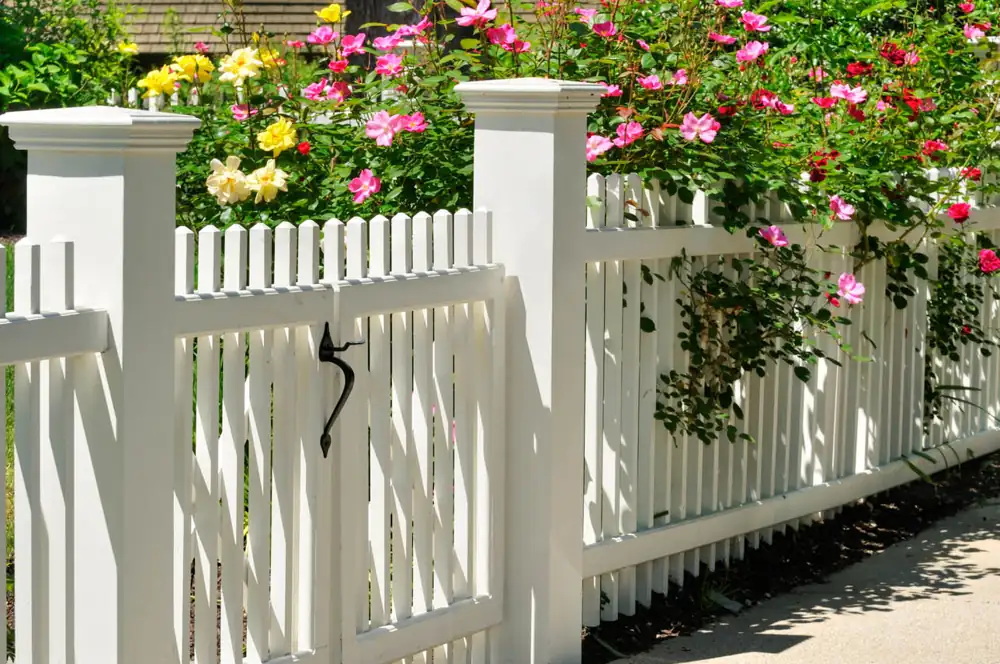
Where to put the gate
Gate placement is worth more thought than most people give it. A few questions to answer:
- What comes through? People only, or the mower, trash cans, a trailer, a tractor?
- Where’s the natural path? Put the gate where people already walk, or they’ll wear a path to a spot without one.
- What’s the ground like? A gate that swings uphill hits the ground. Avoid low spots that turn to mud or ice.
- Which way should it swing? Into the yard is common, but pool gates must swing away from the pool under Pennsylvania’s code.
- Does it need to self-close? For pools, it’s required. For dogs and kids, it’s a good idea.
Latches and locks
Latches range from simple gravity latches to lockable hardware and magnetic pool latches mounted high out of kids’ reach. Tell us who uses the gate and what it needs to keep in or out, and we’ll match the hardware. For pools, the gate must be self-closing and self-latching; our pool fence page has more.
Gates on slopes and uneven ground
Plenty of yards in Bucks County aren’t flat, and gates are where that shows up first. If the ground rises in the path of the swing, the gate hits it long before it opens all the way. There are a few ways around it. We can hang the gate higher and fill the gap below with a matching bottom piece, set the hinges so the gate swings toward the downhill side, or switch to a sliding gate where there’s no room to swing. On a steep grade, sometimes the best answer is simply moving the gate a few feet to flatter ground. We’ll show you the options on site.
Already have a gate that’s giving you trouble?
Our fence repair crew fixes sagging, dragging and unlatching gates, and replaces ones that are past saving. The estimate is free, with no dispatch fee. Call 215-602-4334 and tell us what your gate is doing.
Get a straight answer on your fence.
Free on-site estimate, zero dispatch fees. We handle the permit, the HOA paperwork and the 811 call.