Fence Permits in Doylestown Borough, PA: Heights, Corner Lots, the Historic District, and How It Differs from the Township
“I live in Doylestown” can mean two different towns. Doylestown Borough is the walkable historic center around State and Main, and Doylestown Township surrounds it. They’re separate municipalities with separate offices and different fence rules. This guide covers the Doylestown Borough fence permit: when you need one, how tall a fence can be, corner lots, the Historic District, and how to apply. At the end, we compare the Borough’s rules to the Township’s so you can see why it matters which one you’re in. Ordinances change, so confirm current rules with the Borough before you dig.
First: are you in the Borough or the Township?
Both use Doylestown mailing addresses, so the address alone won’t tell you. Check your tax bill or Bucks County property records. If you’re in the Township, read our guide to fence permits in Doylestown Township instead. Everything below applies to Doylestown Borough only.
Do you need a Doylestown Borough fence permit?
Almost always. The Borough’s Zoning Ordinance (Chapter 27, § 614) says every fence needs a permit before it goes up, and it’s unlawful to “erect, alter or locate a fence” without one. A few points people miss:
- Replacements count. A permit is required to replace a fence, and for any repair worth more than 50% of the value of the existing fence.
- Small exemptions exist. Decorative fences up to 18 inches tall, garden fences up to 24 inches tall, temporary construction fences up to 6 feet, and fences the Zoning Officer orders for public safety don’t need a permit.
- Hedges don’t need a permit, but they still have rules. A “living fence” is exempt from the permit but has to be planted so that its mature size stays at least 2 feet from any sidewalk, future sidewalk, or lot line, and it has to be kept trimmed so it doesn’t block visibility.
Height limits and where fences can go
The Borough treats see-through fences and solid fences differently (§ 614, as amended in 2016):
- See-through fences (think picket, aluminum, or iron) can be up to 6 feet in the side and rear yards, back to the front building line of the house. From the front building line toward the street, they’re limited to 4 feet.
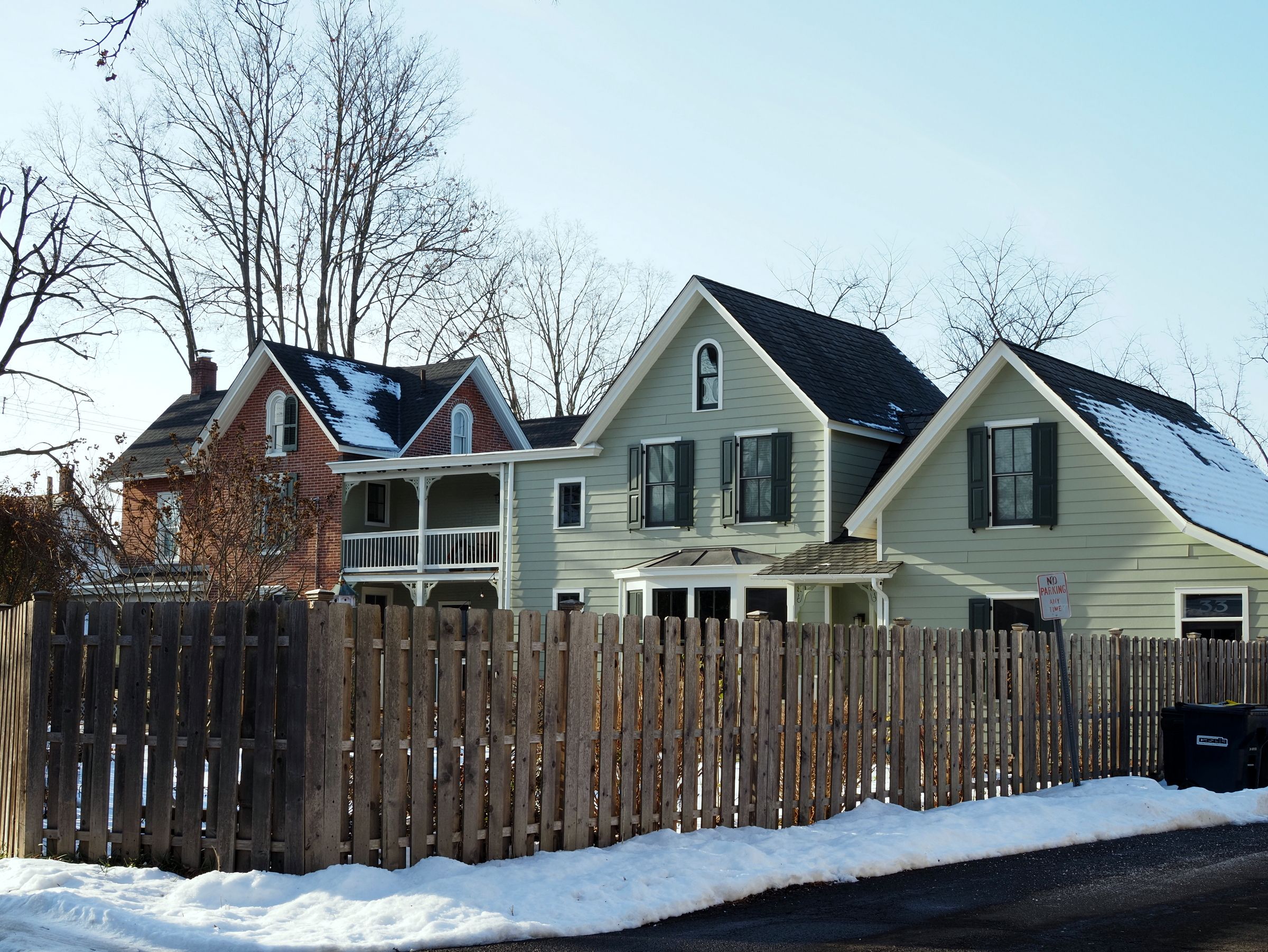
- Solid fences or screens (like a board-on-board privacy fence) can be up to 6 feet and aren’t permitted in front yards at all.
- Everything stays on your property. No part of a fence can sit in the public right-of-way.
The ordinance doesn’t define exactly how open a fence has to be to count as “see-through.” If your style is somewhere in between, like a semi-privacy or spaced-board design, ask the Zoning Officer before you order materials. Our semi-privacy fence page shows the kinds of styles that fall in that gray area.
Corner lots and sight triangles
Corner lots are where Borough rules get interesting. Under the zoning definitions, every yard that faces a street on a corner lot is a front yard. But the fence section has a helpful exception: on a lot with frontage on more than one street, only the frontage that the front of the house faces is held to the front-yard fence limits. The Borough’s Sheds & Fences page puts it plainly: on a corner lot, solid fencing up to 6 feet is allowed in the “functional” rear and side yards.
There’s still a catch at the corner itself. Section 507 sets a clear-sight triangle where two streets meet: within a triangle measured 25 feet along the lot lines from the intersection, nothing (fence, structure, or planting) can sit between 2 feet and 7 feet above curb level. Where a driveway or private accessway meets a street, there’s a smaller 10-foot clear-sight triangle, with obstructions limited to 2 feet above street grade. Your site plan has to show sight triangles if they apply.
Other Borough fence rules worth knowing
- Good side out. The decorative side faces the neighbor, with posts and stringers facing your yard, unless they’re part of the design.
- Hydrants, meters, and manholes. No fence within 6 feet of a fire hydrant. No fence in or enclosing a drainage easement, or over a water meter box or manhole, without the Zoning Officer’s written authorization.
- Utility easements. Fences are allowed in utility easements, but the Borough can remove them without any obligation to replace them, and a gate is required if a water meter is in the easement.
- Water and wind. A fence can’t divert the natural flow of surface water, and it has to be built to handle wind. That’s worth thinking about on a sloped lot; see our guide to fencing a sloped yard.
- Materials and finish. In-ground posts must be decay-, corrosion-, and termite-resistant. Fences must be a single color or left to weather naturally, with no words or graphics. Barbed and razor wire are prohibited, apart from narrow security exceptions.
- Retaining walls are separate. Earth- or water-retaining walls are covered by other parts of the Borough code, not the fence section.
Fences in the Doylestown Historic District
If your home is in the Doylestown Historic District, there’s an extra step. According to the Borough, the Historical and Architectural Review Board (HARB) reviews exterior changes, including fences, that are visible from a public street or way. If your property is in the district and the fence will be visible, you’ll need a Certificate of Appropriateness from Borough Council before your construction permit moves forward.
- HARB meets on the fourth Thursday of the month at 7 p.m., and the applicant is expected to attend.
- The Borough’s application form asks for paper copies plus an email submission. The Borough’s website and the current form list different submission deadlines, so confirm the deadline with the Borough well ahead of the meeting you’re aiming for.
- Plan your schedule around it. The HARB review comes before Council’s decision, and Council’s decision comes before the permit.
Our historic district fences guide covers the styles and materials that usually suit older homes.
How to apply
The Borough’s Fence Permit Application and its 2026 Fee Schedule spell out the process:
- Prepare a site plan to scale, in duplicate. Show all structures, easements, rights-of-way, the fence location, length, and height, the materials, sight triangles at corners, and fire hydrants, if they apply.
- Get your neighbor’s written permission if the fence will be on the property line. That’s on the Borough’s application checklist.
- Submit the application to the Borough office at 10 Doyle Street with the site plans and the fee. The 2026 fee schedule lists the fence permit at $50, paid by check to the Borough of Doylestown. Incomplete applications aren’t accepted.
- Wait for the permit. The application says review normally takes 7 to 10 days and can take up to 20. Don’t start work until the permit is issued. The fee schedule doubles permit fees for work started without a required permit.
- Schedule the final inspection once the fence is up. That closes out the permit.
The application also asks for your contractor’s Pennsylvania Home Improvement Contractor registration number. Questions go to the Borough’s Building & Zoning Department at 215-345-4140. Before anyone digs, call PA One Call; our before you dig guide explains how.
Doylestown Borough vs. Doylestown Township at a glance
| Doylestown Borough | Doylestown Township | |
|---|---|---|
| Side and rear yard height | Up to 6 ft | Up to 8 ft |
| Front yard | See-through only, up to 4 ft; no solid fences | Up to 6 ft |
| On the property line | Neighbor’s written permission required on the application | Not allowed; the line is jointly owned |
| Easements | Utility easements allowed (Borough can remove); drainage easements only with written authorization | Not permitted in easements |
| Historic review | HARB review for visible fences in the Historic District | Not covered in the Township’s fence guidelines |
| Application | Fence Permit Application, 2 scaled site plans, $50 fee | Zoning Permit Application, 2 site plans |
The short version: the Township allows taller fences, while the Borough is stricter about front yards and adds historic review in the district.
Frequently asked questions
Can I put a privacy fence in my front yard in Doylestown Borough?
No. Solid fences aren’t permitted in front yards. A see-through fence up to 4 feet is allowed in front of the house.
Can I build an 8-foot fence in the Borough?
Not under § 614, which caps both see-through and solid fences at 6 feet. The 8-foot limit you may have heard about applies in Doylestown Township, not the Borough.
Do I need a permit to replace my old fence?
Yes. The ordinance requires a permit for fence replacement and for repairs worth more than 50% of the existing fence’s value. Small repairs below that threshold don’t need one.
Does a hedge need a permit?
No, but it has to be planted so its mature size stays at least 2 feet from sidewalks and lot lines, and it has to be kept trimmed so it doesn’t block visibility.
How 76 FENCE BucksMont handles Borough fences
Our Doylestown office is right in the neighborhood. Learn more on our Doylestown fence page. When you hire us, we confirm whether you’re in the Borough or the Township, check for corner sight triangles, hydrants, and easements, prepare the site plan, file the application, and place the PA One Call request. Our fence permits page explains how we handle permits across Bucks and Montgomery County.
This is a plain-English summary of Doylestown Borough’s Zoning Ordinance (Chapter 27) §§ 507 and 614, its definitions, the Borough’s Fence Permit Application, its 2026 Fee Schedule, and its Historic District information, not legal advice. Rules get updated, so confirm current requirements with the Borough before you build.
Planning a fence in Doylestown Borough? Request a free on-site estimate through our contact page, or call our Doylestown office at 215-602-4334. We’ll walk your property, sort out the front-yard and corner-lot rules, and tell you what the Borough will need before posts go in the ground.