
Why Fence Posts Lean in Bucks County (and How to Fix Frost Heave)
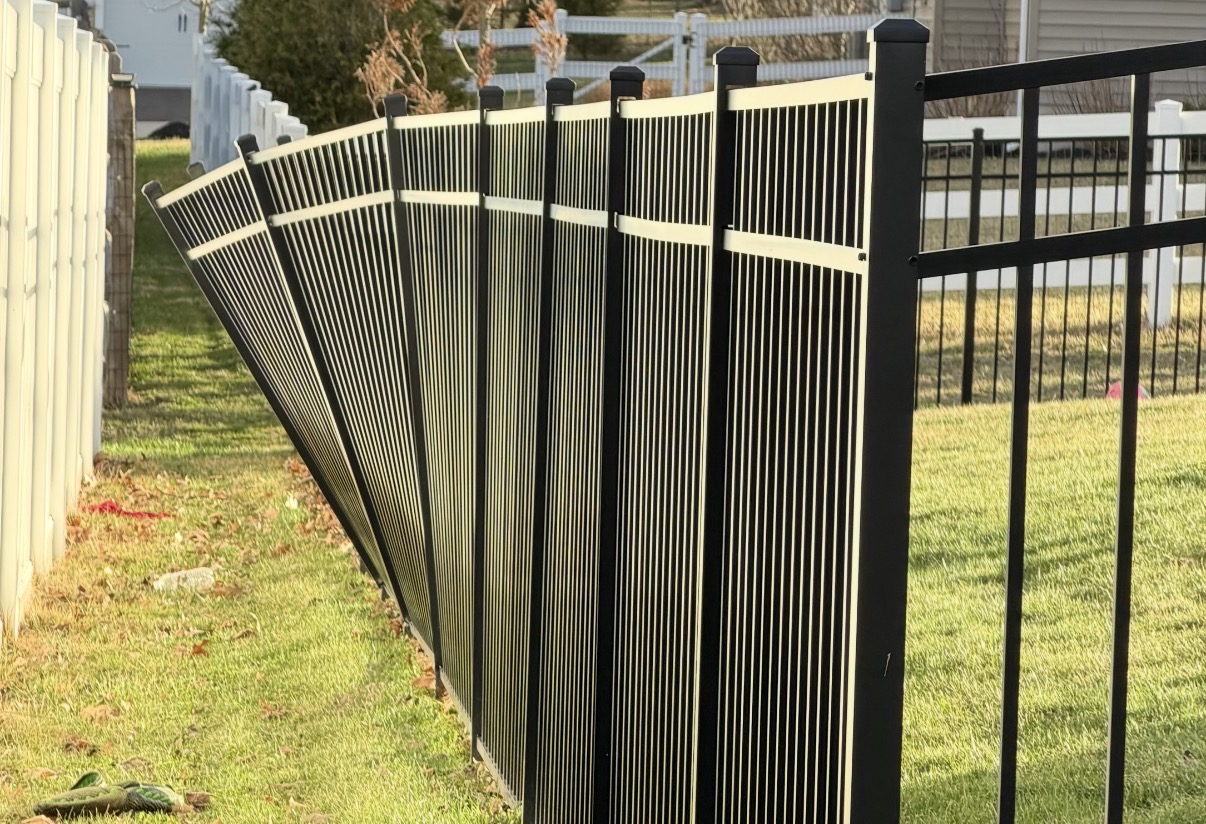
Every spring we hear some version of the same thing: “The fence was fine in the fall. Now it’s leaning, and the gate won’t latch.” Nobody hit it, and no storm knocked it over. In a lot of Bucks County and eastern Montgomery County yards, the culprit is frost heave. Here’s what’s going on underground, how to tell if it’s your problem, and how to fix it so it doesn’t come back next winter.
What frost heave actually does to a fence post
Soil holds water. When the ground freezes, that water turns to ice and expands. Frozen soil grips whatever is in it, including the sides of a fence post and its footing, and as the frozen layer swells, it pushes up and lifts the post with it.
Here’s the catch: when the ground thaws, the post doesn’t drop neatly back into place. Loose soil and water fill in the space underneath, so the post settles a little higher or a little crooked. Our winters freeze and thaw over and over, so that small shift repeats. A post can move a bit each season, and after a few winters you’ve got a fence that leans, rails that pull off their brackets, and a gate that drags or won’t close.
The fix is depth. When the bottom of a post sits below the frost line, the soil holding it in place doesn’t freeze, so there’s solid ground anchoring it while the top layer moves around. In southeast Pennsylvania, the frost line is commonly around 30 to 36 inches, with your local code having the final word. Posts set much shallower than that are the ones we see heaving.
Signs your leaning fence is frost heave
- The lean shows up after winter. It looked straight in the fall and crooked by March or April.
- Posts sit higher than they used to. One post rides above its neighbors, the rails slope where they didn’t before, or a gap opens up under the bottom rail.
- The concrete collar is showing. A footing that was flush with the grade now pokes up out of the lawn.
- The gate stops lining up. Gate posts carry the most weight and take the most abuse, so they often show it first. The latch misses, or the gate rubs the ground.
- It’s worse in the wet spots. The posts in the low corner or by the downspout are leaning, while the ones on high ground are fine.
If a section is snapped, a tree came down on it, or a whole run went over in high wind, that’s a different problem. Our storm damage repair vs. replace guide covers that.
Why some yards here heave more than others
Frost heave needs two things: freezing temperatures and water in the soil. We get the freezing every winter, so water is the variable. Posts heave the most where the ground stays wet:
- Clay soil. Clay holds water and drains slowly, which gives frost plenty to work with.
- Low corners and swales. Water runs downhill and sits in the low parts of the yard, often right where the fence runs along the back of the lot.
- Next to downspouts and drainage outlets. A post sitting in the splash zone of a downspout is soaked all winter.
- Near creeks and in flatter, wetter yards. We see this a lot in lower Bucks and in creek-side neighborhoods.
Rocky ground is a different story. In parts of central and upper Bucks, rock and shale make it hard to dig post holes to full depth. That’s a digging challenge, not heave, but a post that stopped short because the crew hit rock can end up too shallow and open to frost movement anyway.
Repair or replace?
Not every leaning fence needs to come out. It usually comes down to how widespread the problem is and what shape the materials are in.
- A few leaning posts, materials in good shape: those posts can often be dug out and reset to proper depth, and the panels or rails rehung. This is common with gate posts and posts in one wet corner.
- Lean along most of the fence: that usually means the whole fence was set too shallow. At that point, it’s worth comparing a full reset against a new fence.
- Rotten wood at the ground line: if wood posts are soft where they meet the soil, resetting them doesn’t help. Those posts need to be replaced, and if the rot is widespread, so does the fence.
How to fix frost heave the right way
The tempting fix is to push the post straight, nail on a brace, and call it done. That might look fine for a season, but the post is still sitting at the same shallow depth in the same wet soil, so next winter it heaves again. A lasting repair deals with depth and drainage.
- Call 811 first. Repairs involve digging too. A PA One Call request has to go in at least three business days before anyone digs, even if you’re just resetting one post. Our 811 guide explains how it works.
- Dig the post out completely. That includes the old concrete. A shallow footing left in the ground just becomes something new to work around.
- Go below the frost line. Reset the post deeper than the old one, below the local frost depth. Check your municipality’s code for what it requires.
- Give water somewhere to go. Where appropriate, a gravel base at the bottom of the hole helps water drain away from the post instead of collecting under it.
- Shape the footing so frost can’t grab it. A footing that flares out wide at the top gives frozen soil a lip to push up on. Keep the top of the concrete neat and sloped so water runs away from the post. In wet spots, a bell-shaped footing that’s wider at the bottom gives the post extra hold against lifting.
- Build gate posts heavier. Gate posts carry a swinging load on top of everything else, so they should be set especially deep and solid.
- Fix the water source if you can. Extending a downspout or regrading a soggy spot away from the fence line takes pressure off the posts for good.
One timing note: you can’t reset posts properly while the ground is frozen solid, so heave repairs usually happen once things thaw. If a gate is unusable in the meantime, a temporary fix can get you through, as long as the real repair follows.
Preventing it on a new fence
If you’re replacing a fence that heaved, ask any contractor how deep the new posts will go, how they’re set, and how gate posts and wet spots will be handled. The answer should be specific.
Got a fence that leans every spring?
We’ll walk the fence with you, check post depth and drainage, and tell you honestly whether it needs a few posts reset or a full replacement. See our fence repair and services pages, or schedule a free on-site estimate. Call 215-602-4334 for central and upper Bucks County, or 610-477-7080 for lower Bucks and eastern Montgomery County. You can also reach us through our contact page.