Winter Fence Protection in Bucks County: Snowplows, Road Salt, and Heavy Snow
Most winter fence damage in Bucks County doesn’t come from the cold itself. It comes from what happens around the fence: a plow throwing a wall of heavy snow off the road, salty slush splashing the bottom boards all season, a snowblower aimed at the same section every storm, or a drift that leans on a gate for weeks. The good news is that a little planning before the first storm prevents most of it. This guide covers practical winter fence protection in Bucks County: how to keep plows, road salt, and heavy snow from shortening the life of your fence, whether you’re in Doylestown, Newtown, Quakertown, or anywhere in between.
If your posts are already leaning after a hard winter, that’s usually a frost heave problem, and we cover it separately in why fence posts lean in Bucks County. This article is about the damage you can see coming and head off.
Snowplows: the biggest threat to street-side fences
Plows push snow to the side of the road, and anything close to the curb takes the hit. Plowed snow is dense and often full of ice chunks and slush, so it hits a fence much harder than fresh snowfall. Corner lots get it from two directions.
Give the fence some room from the road
The best plow protection is placement. A fence set right behind the curb or sidewalk will get buried and battered every winter. If you’re installing a new fence along a street, setting it back from the road edge gives plowed snow somewhere to land. Keep in mind that the strip along the street is often part of the public right-of-way, not your yard, and most municipalities don’t allow fences there. Your survey and your township or borough’s rules come first. Our fence permits page explains how we handle that research.
Mark the fence line before the first storm
Tall reflective driveway markers along the street side of your fence and at the ends of your driveway help plow drivers, and any private plow contractor you hire, see where the fence is once the snow is deep. Put them in before the ground freezes, and keep them on your own property. If you hire someone to plow your driveway, walk the property with them and point out the fence, gates, and any posts close to the pavement. While you’re out there, fix loose boards and hinge screws before the snow hides them.
Watch where your own snow goes
Homeowners do plenty of damage too. A snowblower chute aimed at the same stretch of fence all winter can crack vinyl, pit soft wood, and pack heavy snow against the panels. Aim the chute at open lawn instead, and don’t use the fence as a backstop for your shovel pile.
Road salt and brine: slow damage you don’t notice until spring
Salt and brine keep roads safe, but the spray and slush end up on anything near the road. The damage is slow, and you usually won’t see it until spring, when the bottom of the fence looks worse than the top.
How salt affects different fence materials
- Wood: Salty slush keeps the lower boards and post bases wet for long stretches, which is hard on the stain and the wood behind it. Keeping a small gap between the bottom of the boards and the ground helps them dry out. Our guide to staining and sealing a wood fence covers how to protect the finish.
- Steel and chain link: Salt speeds up rust wherever the coating is scratched or chipped, so a nick from a shovel or plow is worth touching up. Vinyl-coated chain link adds a layer of protection over the metal. See our chain link fences and ornamental steel fences pages for material details.
- Aluminum: Aluminum doesn’t rust the way steel does, and a powder-coated finish holds up well, but salt residue left sitting on the finish all season isn’t doing it any favors. Learn more on our aluminum fences page.
- Vinyl: Salt won’t rot or rust vinyl, but the grime it leaves behind is easy to see on a white fence. The bigger winter concern for vinyl is impact. Cold vinyl is less forgiving when a chunk of plowed ice hits it. Our vinyl fences page has more.
Be careful with ice melt near the fence
The ice melt you spread on your own walkway can do the same thing as road salt. Where a path or driveway runs right along a fence, use only as much as you need, keep it off the fence line, and consider sand for traction in those spots. Read the product label for guidance on use around wood, metal, concrete, and plants.
Rinse it off when the weather breaks
On a mild day in late winter or early spring, a gentle rinse with a garden hose along the street side of the fence washes off salt residue before it sits there for months. Skip the pressure washer on wood and vinyl; a hose and a soft brush are enough.
Heavy snow and drifts
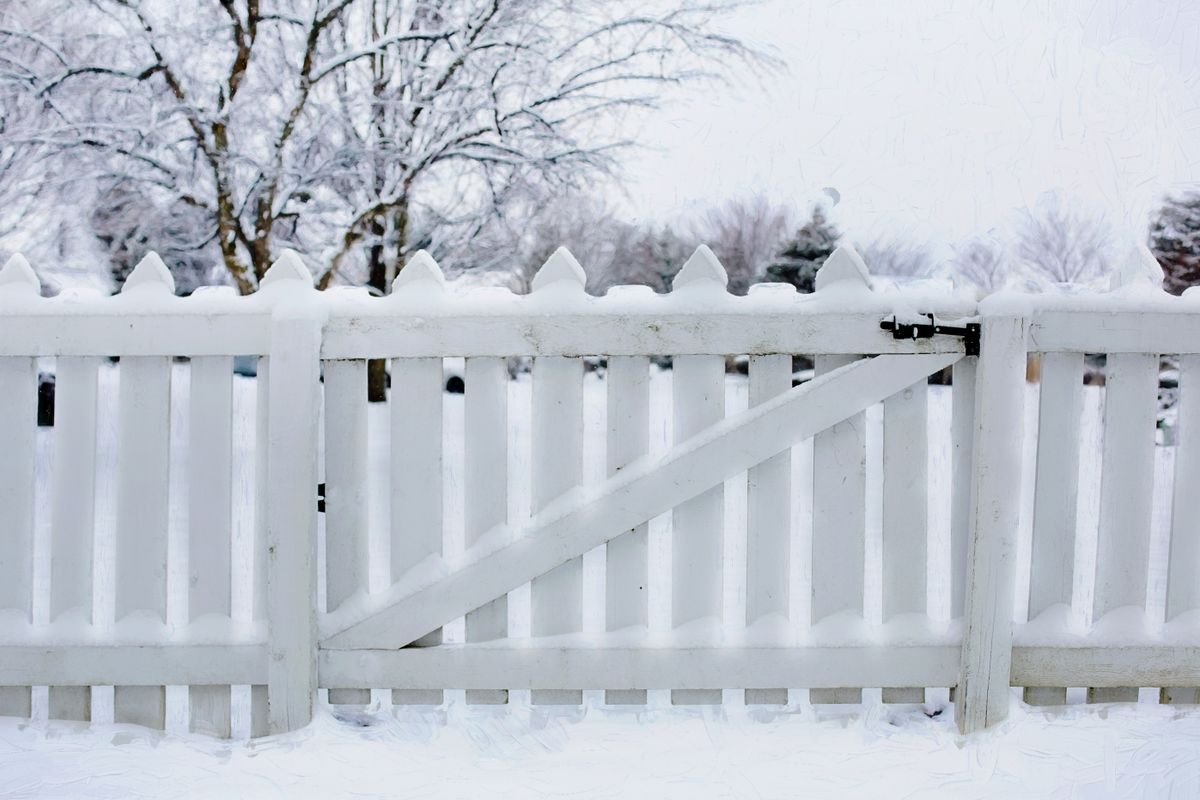
Light snow won’t hurt a well-built fence. Wet, heavy snow and wind-driven drifts are another story. Solid privacy fences catch drifts on the downwind side, and that snow can sit against the panels for weeks, adding weight and keeping wood damp. Open styles like split rail, picket, and aluminum let more snow pass through.
- Don’t pile snow against the fence. Shoveled or blown snow packs down hard and pushes sideways on the panels and posts.
- Clear heavy buildup gently. If wet snow is loading up a lattice top, horizontal rails, or a tall section of fence, brush it off with a broom. Don’t chip at ice on the fence with a shovel.
- Look for trees and limbs. Ice and heavy snow bring down branches, and branches over a fence line are a common cause of broken rails. Trimming them back in fall helps. If a storm does bring a limb down, our guide to storm-damaged fence repair walks through repair versus replacement.
Gates in winter: keep them clear and don’t force them
Gates take more winter abuse than any other part of a fence. Snow builds up in the swing path, latches freeze, and a hard yank on a stuck gate can pull a hinge screw loose.
- Shovel the swing path after each storm, on both sides if the gate swings both ways.
- Don’t force a frozen gate. Clear the ice from the bottom and around the latch first. Forcing it strains the hinges and can start a sag.
- Check the latch. If the latch is iced over or won’t catch, clear it before you rely on it, especially on a pool gate or a gate that keeps a dog in the yard.
- Keep pool gates working. A pool gate is meant to close and latch on its own. Snow piled in its path can stop that from happening, so keep it clear all winter, even with the pool closed.
If your gate was already dragging before winter, the cold will make it worse. Our article on why fence gates sag and how to fix them explains the usual causes, and our gates page covers hardware and style options.
Your spring fence inspection
Once the snow melts, take 15 minutes to walk the whole fence. Here’s what to look for:
- Street-side sections: cracked or knocked-out pickets, bent rails, and posts pushed out of line by plowed snow.
- Lower boards and post bases: discoloration, soft spots, peeling finish, or rust where salt and slush sat all winter.
- Gates: a gate that drags, won’t latch, or has loose hinges.
- Posts: any that lean or have lifted, which points to frost heave rather than plow damage.
- Finish: wood that’s ready for cleaning and a fresh coat of stain or sealer.
If you’re wondering how much life your fence has left, our guide on how long fences last is a good place to start, and our fence repair team can handle anything you’d rather not tackle yourself.
Frequently asked questions
Who pays if a snowplow damages my fence?
It depends on who was plowing, where the fence sits, and your homeowner’s insurance, so there’s no single answer. Take photos as soon as you see the damage, note the date, and contact your municipality, PennDOT, or your plow contractor, depending on who maintains the road or driveway. A fence that sits in the public right-of-way may not be covered at all, which is one more reason to keep it on your side of the line.
Can you install a fence in winter?
Often, yes. We cover the pros and cons in fall and winter fence installation in Bucks County.
Get your fence ready for winter
Planning a new fence near the road, or wondering whether last winter did more damage than you thought? Request a free on-site estimate through our contact page, or call our Doylestown office at 215-602-4334. We’ll look at where plowed snow lands, check your gates and posts, and help you plan a fence that holds up to Bucks County winters.