Will a Vinyl Privacy Fence Hold Up in Bucks County High Winds?
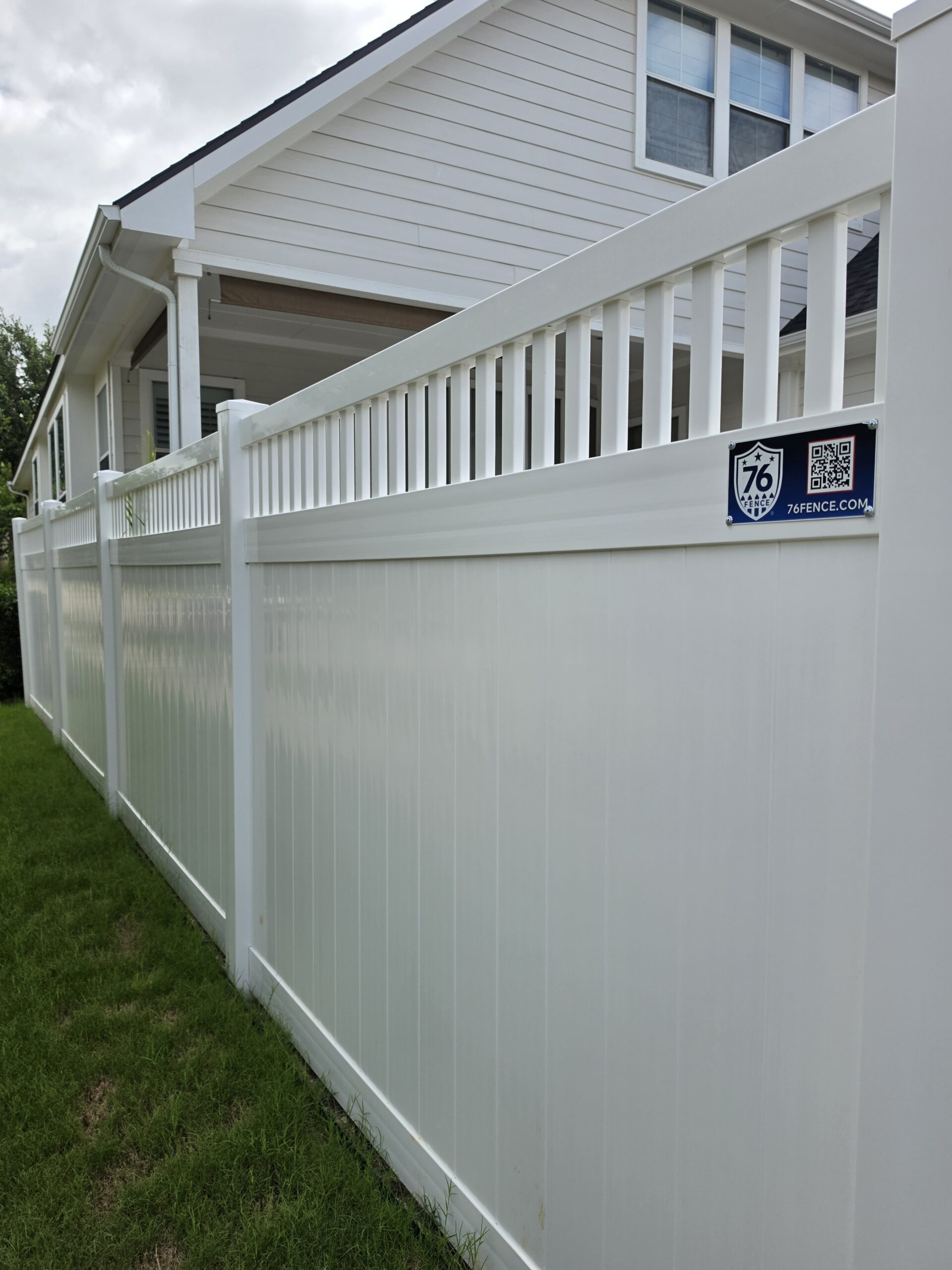
Solid vinyl privacy fences look great and give you a real sense of enclosure—but they also catch more wind than an open picket, aluminum, or chain-link run. In Bucks County, where summer thunderstorms and the occasional nor’easter push hard against backyard fences, the question isn’t whether vinyl can work. It’s whether the install is built for wind. This guide focuses on prevention: post depth, panel choice, and the questions to ask before you sign—not storm repair-vs-replace decisions after something already fails.
Why solid privacy panels catch more wind
That’s basic physics, not a knock on vinyl. A full-privacy panel is a continuous surface. Wind hits it and has nowhere to pass through, so the load transfers into the posts, brackets, and footings. Open styles—spaced pickets, ornamental aluminum, chain link—let air move through. Same storm, less “sail.” If you want privacy and wind resilience, you don’t have to abandon vinyl; you do need an install that matches the exposure and panel style.
Post depth and footings matter most
When vinyl privacy fences lean or pull free after a big storm, the weak link is usually below grade: posts that aren’t deep enough, holes that are too narrow, or concrete that wasn’t allowed to cure before the heavy panels went on. In Bucks and eastern Montgomery County, frost heave is a real concern too—posts need to sit below the frost line. Local practice commonly puts that around three feet, but ask your contractor what depth they use on jobs in your township rather than assuming a single number from the internet.
Corners, ends, and gate posts take more load than a mid-run line post. A quality crew sizes those holes and reinforcement accordingly—especially on long runs or yards that open onto fields, hillsides, or wide streets where wind has a clean approach.
Panel choice: full privacy vs. less sail
Full solid privacy panels give maximum screening and maximum wind surface. Semi-privacy designs and lattice-top panels reduce that sail effect while still giving a sense of enclosure from many angles. Neither is “right” for every yard—it depends on how much privacy you need versus how exposed the lot is. On a sheltered in-fill lot, full privacy is often fine with a solid footing plan. On an open ridge or field edge, talking through lattice-top or semi-privacy sections on the windiest stretches is worth five minutes on the estimate visit.
Many vinyl manufacturers also offer steel inserts (reinforcement) inside posts as an option. Ask whether your quote includes them, where they’d be used (corners and gates are common), and how the crew decides. Treat reinforcement as a design choice to discuss—not a guarantee against every storm.
What a wind-smart install looks like
Good installs share a few practical habits:
- Plumb posts set in properly sized holes with concrete footings suited to the soil and frost depth
- Concrete cure time before hanging long, heavy privacy runs—rushing panels onto soft footings invites lean later
- Solid brackets and fasteners matched to the panel system, not improvised hardware
- Gates that aren’t overspanned—wide gates and weak gate posts are common failure points when wind slams a gate or loads a corner
- Attention to long continuous runs on windy exposures, with stronger treatment at corners, ends, and changes of direction
None of that requires inventing wind ratings. It’s the difference between a fence that looks finished on day one and one that still looks straight after a rough season.
Questions to ask your fence contractor
Before you compare quotes, ask the same wind-related questions of every bidder:
- What post-hole depth and diameter do you use for vinyl privacy in this area?
- Concrete-set posts or driven? Why for my soil and exposure?
- Do you include steel inserts in posts—and on which posts?
- How do you handle long runs and open, windy exposures versus sheltered yards?
- What’s your plan for corners, ends, and gate posts?
- How long do footings cure before panels go up?
Clear answers beat vague “we go deep enough.” If a quote is much lower than others, ask what was left out of the footing or reinforcement plan—that’s often where shortcuts hide.
Bucks County weather, without the hype
Bucks County sees strong thunderstorms most years and, from time to time, nor’easter or leftover tropical wind that loads fences harder than a typical summer afternoon. You don’t need invented mph numbers to plan for that. You need posts below frost, panels chosen for the site, and an installer who builds the high-load points (corners, gates, long open runs) like they matter—because they do.
Call 811 before posts go in
Deep footings mean digging. Pennsylvania law requires a PA One Call (811) request before you dig so underground utilities get marked. That applies whether you’re installing vinyl privacy, wood, or aluminum. Our before you dig / 811 guide covers the basics. Marked utilities and solid footings belong in the same conversation.
How 76 FENCE BucksMont approaches vinyl privacy in wind
When we estimate a vinyl privacy fence in Bucks or eastern Montgomery County, we look at the lot’s exposure—not just the style you picked from a brochure. Post depth, footing size, corners and gates, and whether steel reinforcement makes sense for your run are part of that conversation. We install wood, vinyl, aluminum, chain link, and related fence types from our Doylestown and Newtown offices, and we handle PA One Call (811) as part of the job.
Every site is different. The goal of this article is practical prevention talk—not promises about any particular storm. If you want a fence that balances privacy with how your yard actually catches wind, an on-site look beats guessing from photos.
Considering a vinyl privacy fence in Bucks County or eastern Montgomery? Request a free on-site estimate through our contact page, or call our Doylestown office at 215-602-4334 (central and upper Bucks) or our Newtown office at 610-477-7080 (lower Bucks and eastern Montgomery). We’ll walk the property, talk through panel options and footing plans, and give you a clear install approach for your site.