
Staining and Sealing a Wood Fence in Bucks County: When and How
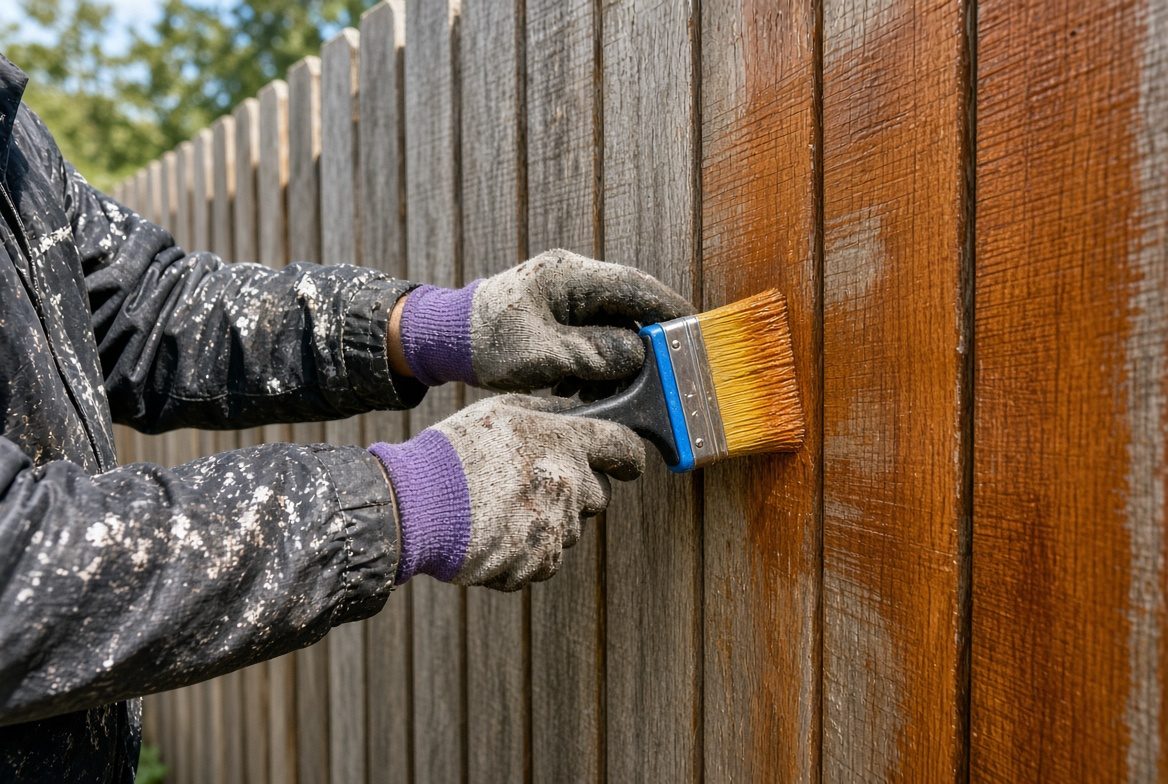
A wood fence looks great the day it goes in. Whether it still looks good in ten years mostly comes down to what happens after: cleaning, staining or sealing, and catching small problems before they turn into rotten posts. Here’s how to care for a wood fence in Bucks County and eastern Montgomery County, where humid summers, shady lots, and freeze-thaw winters all work against it.
Why wood fences here need a finish
Bare wood takes a beating in our climate. Sun fades it to gray and dries out the surface. Rain and humidity soak in, and the wood swells and shrinks over and over. In winter, water that gets into cracks freezes and opens them wider. On shady lots under big trees, boards stay damp and grow mildew, moss, or algae. A good stain or sealer slows all of that down by keeping water out and, with pigmented stains, blocking some of the sun.
When to stain a new wood fence
New wood usually isn’t ready for stain right away. Pressure-treated pine often comes from the yard still wet from treatment, and stain won’t soak in properly until it dries out. Cedar tends to be ready sooner, but it still needs to be clean and dry.
An easy check is the water test: sprinkle a little water on a few boards. If it beads up and sits there, the wood isn’t ready. If it soaks in within a few minutes, it’s time. Always check the stain manufacturer’s label too, since some products have their own guidance for new wood.
The best time of year to stain in Bucks County
Late spring and early fall are usually the easiest windows here. What you want is a stretch of dry days, mild temperatures, and no rain in the forecast for at least as long as the label says the stain needs to cure.
- Watch the temperature on the can. Every stain lists a minimum (and often a maximum) temperature. In October and November, nights can drop below it even when the afternoon feels warm.
- Skip the dew. Fall mornings here are often wet. Start after the fence has dried off and stop early enough that the stain sets before evening dew.
- Avoid direct midday sun in summer. Stain that dries too fast can lap and look blotchy. Work the shady side first and follow the shade around.
- Wait out pollen season. Staining over a coat of spring pollen traps it in the finish.
How to stain or seal a wood fence
- Inspect first. Walk the line and look for loose boards, popped fasteners, cracked rails, and soft spots at the bottom of the posts. Fix those before you finish the wood.
- Clean it. Use a cleaner made for exterior wood to remove dirt, mildew, and graying. If you use a pressure washer, keep it on a low setting and hold it back from the wood; too much pressure tears up the grain.
- Let it dry. Give the fence time to dry fully after cleaning, usually at least a day or two of dry weather. Do the water test again if you’re not sure.
- Protect what’s around it. Cover plants, the house siding, and anything nearby. On a windy day, sprayed stain travels farther than you think, including onto a neighbor’s car.
- Apply thin, even coats. Brush, roll, or spray, then back-brush to work it into the wood. Do a few boards at a time from top to bottom so you keep a wet edge. Don’t forget the tops of posts and the bottoms of boards, where water sits longest.
- Follow the label on recoat and cure times. Some products want a second coat while the first is still damp; others want a full day in between.
Clear sealer, semi-transparent, or solid stain?
- Clear sealers show off the most grain and help keep water out, but they usually offer the least protection from sun, so the wood will still gray over time.
- Semi-transparent stains add some color and more UV protection while letting the grain show. They’re a popular middle ground for cedar and pine fences.
- Solid stains look closer to paint, hide the grain, and give the most color protection. They’re a good way to even out an older fence with mismatched boards.
Oil-based and water-based products both have fans. The bigger thing is to stick with the same type when you recoat, or strip the old finish before switching.
How often to restain
Plan on refinishing every few years, but let the fence tell you. Sun-facing sections usually wear first. When water stops beading and starts soaking in, or the color has clearly faded, it’s time for another coat. Keeping sprinklers aimed away from the fence and trimming back shrubs and vines so the boards can dry out will stretch the time between coats.
When maintenance isn’t enough
Stain protects good wood; it can’t fix bad wood. If posts are soft at the ground line, the fence is leaning, or whole sections are split and warped, it’s time to look at fence repair or replacement. Some homeowners decide at that point that they’re done with staining altogether, and our vinyl vs. wood comparison walks through that choice. If you love the look of wood, our wood fence page covers cedar and pressure-treated options.
Not sure if your fence is worth saving?
Schedule a free on-site estimate, and we’ll walk the fence with you, check the posts, and tell you honestly whether it needs a repair, a replacement, or just a good cleaning and a fresh coat. Call 215-602-4334 for central and upper Bucks County, or 610-477-7080 for lower Bucks and eastern Montgomery County.